
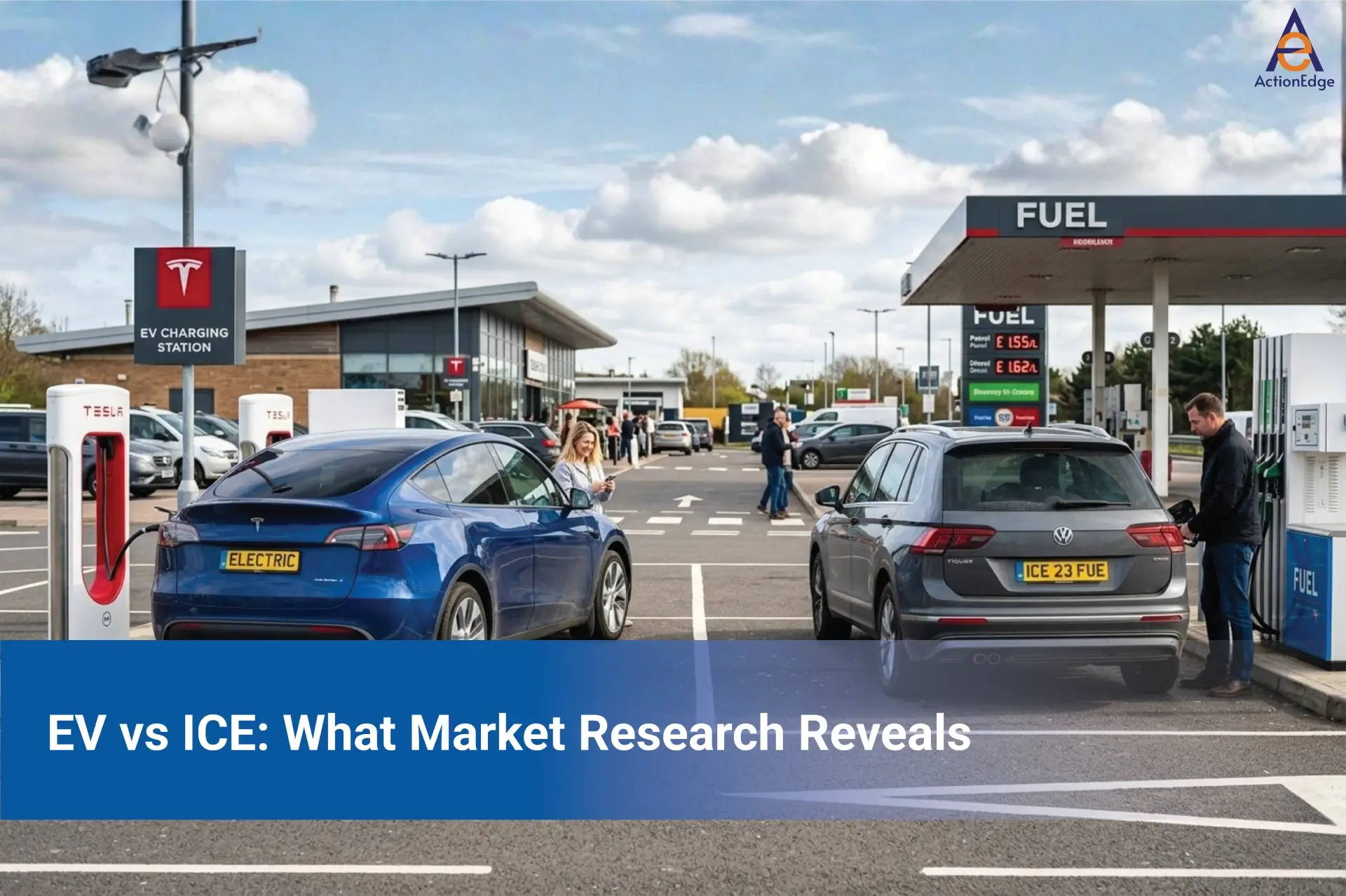
Buying a car is no longer just a purchase decision. It is a choice between two worlds.
On one side, internal combustion engine vehicles offer familiarity, reliability, and a system people understand. On the other hand, electric vehicles promise innovation, sustainability, and a very different ownership experience. The shift is happening, but not as smoothly as headlines suggest.
Consumers today are curious but cautious. They are drawn to EVs, yet held back by practical concerns and long-standing habits. This is not just a technological transition. It is a behavioral shift shaped by perception, trust, and real-world usability.
The scale of this opportunity is significant. A global study by TCS found that 64% of consumers are likely to consider an EV as their next vehicle, signaling strong intent toward adoption. Yet, this intent is tempered by concerns around cost, infrastructure, and reliability, creating a gap between interest and action.
That is exactly why automotive market research is becoming critical. It helps brands move beyond assumptions and decode what truly drives consumer decisions in this evolving landscape.
EV vs ICE: Understanding the Core Difference
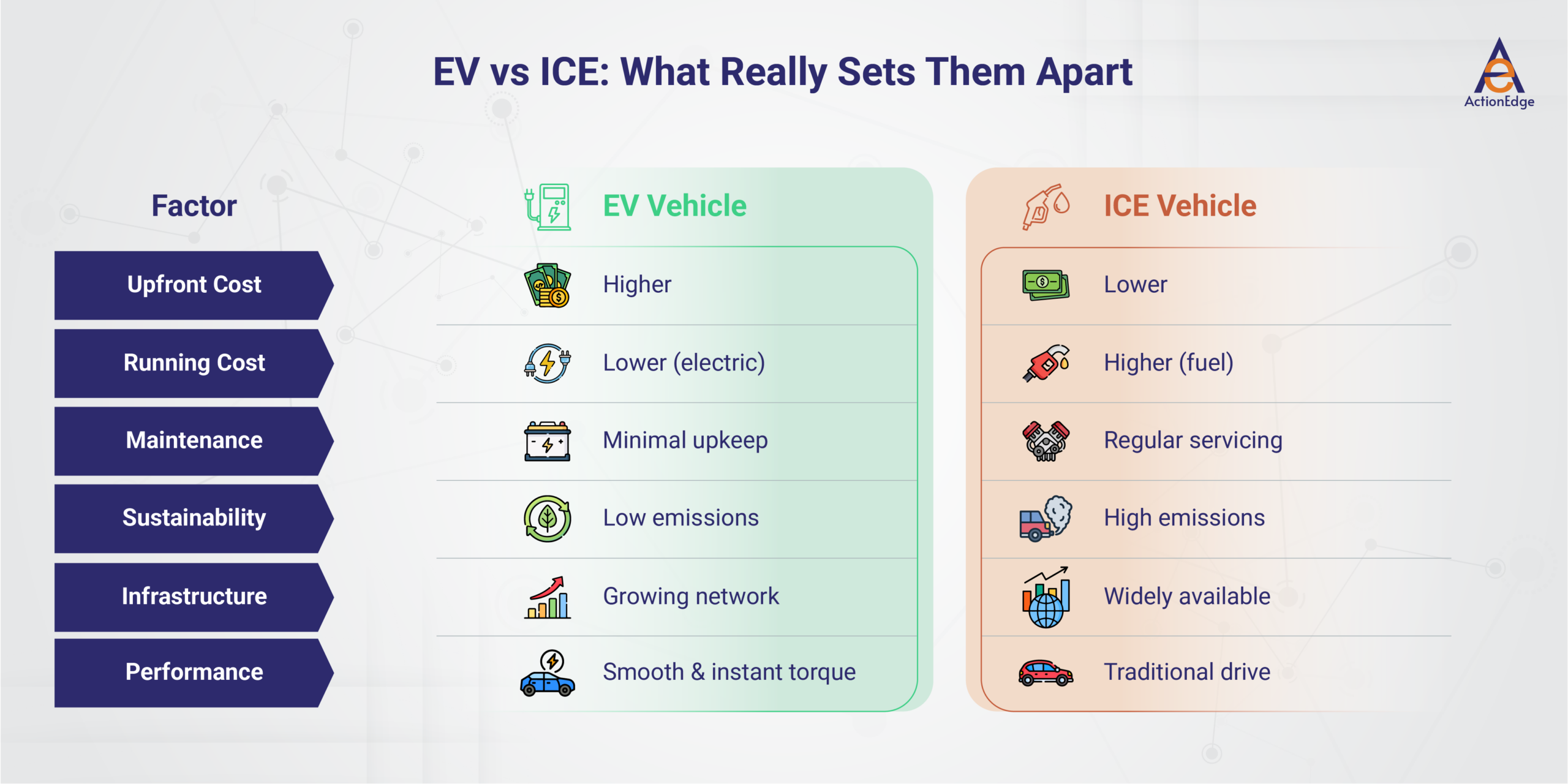
At a fundamental level, EVs and ICE vehicles differ across cost, performance, and sustainability.
EVs offer lower operating costs and reduced emissions, while ICE vehicles often offer lower upfront costs and a well-established ecosystem. However, consumer perception does not always reflect reality.
For example, many buyers assume EVs are expensive overall, while in many cases, total ownership costs can be competitive over time. Similarly, performance concerns persist despite rapid technological improvements, even though EVs often deliver smoother acceleration and lower maintenance needs.
In today’s market, the choice is less about specifications and more about confidence in the experience. Consumers are not just buying a vehicle. They are buying into a system that includes charging, servicing, and long-term usability.
Current Consumer Sentiment: What Research Says
Consumer sentiment toward EVs is evolving but remains divided.
Urban consumers and younger buyers are more open to adoption, driven by environmental awareness and interest in new technology. Many see EVs as a future-forward choice that aligns with their lifestyle and values.
At the same time, a large segment continues to hesitate due to uncertainty around reliability, resale value, and convenience. For these consumers, the decision is not about rejecting EVs, but about waiting until the ecosystem feels more stable and predictable.
This hesitation is not without reason. Industry insights from S&P Global indicate that nearly 60% of consumers still perceive EVs as too expensive, while more than half express concerns around charging time. These persistent perceptions continue to slow down adoption despite growing interest.
This is where automotive market research provides clarity. It reveals not just adoption trends, but the deeper motivations, trade-offs, and emotional triggers behind both enthusiasm and hesitation.
Key Barriers Slowing EV Adoption
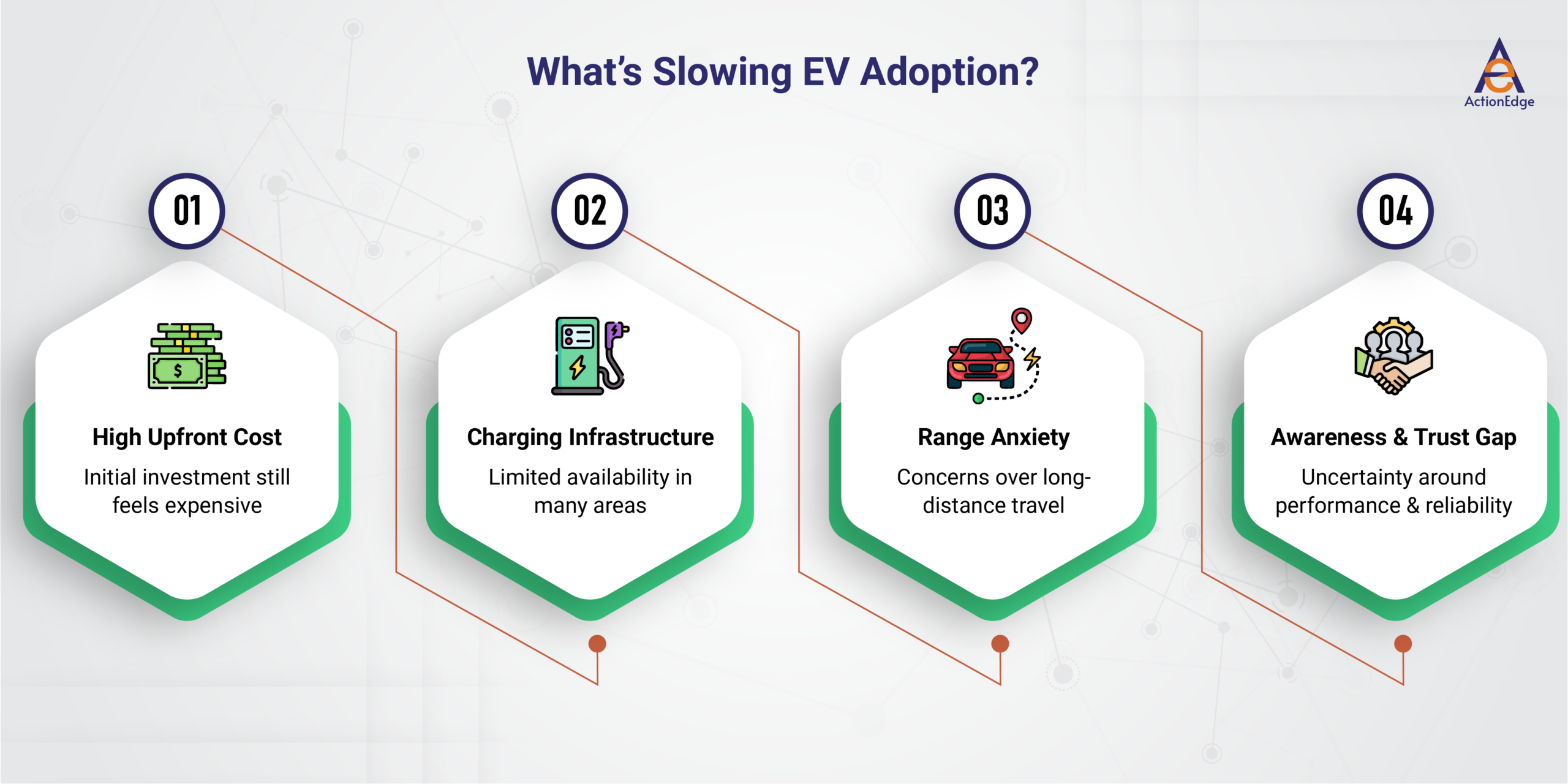
Despite growing awareness, several challenges continue to slow EV adoption. Consumer preferences are not moving in a straight line. According to EY’s Mobility Consumer Index, nearly 50% of global car buyers still intend to choose ICE vehicles for their next purchase, marking a notable increase. A key driver behind this shift is practical concern, with a significant share of consumers citing gaps in public charging infrastructure.
These realities reinforce the barriers that continue to shape decision-making:
- High upfront cost compared to ICE vehicles
- Limited charging infrastructure in many regions
- Range anxiety, especially for long-distance travel
- Lack of awareness and trust in new technology
Importantly, these barriers are not universal. They vary across geographies, income groups, and usage patterns. For example, a daily city commuter may find EVs highly practical, while a frequent long-distance traveler may still prefer ICE vehicles due to convenience and reliability.
Understanding these nuances is essential. Without this context, brands risk overestimating demand or misaligning their offerings, ultimately slowing down adoption instead of accelerating it.
Why Some Consumers Still Prefer ICE Vehicles
ICE vehicles continue to hold strong appeal for a simple reason. They are familiar.
Consumers trust what they know. ICE vehicles are seen as reliable, easy to service, and supported by widespread infrastructure. Fuel stations are easily accessible, and servicing networks are well established.
For many buyers, switching to EVs still feels like stepping into the unknown. Even if the benefits are clear, the perceived risk remains high.
This perception gap is one of the biggest challenges in accelerating EV adoption. Addressing it requires not just innovation, but reassurance and education.
The Turning Point: Where the Shift Is Happening
The transition is gaining momentum, but in selective pockets. It is not a linear shift from ICE to EV, but a gradual and layered evolution. Insights from Deloitte’s Global Automotive Consumer Study highlight this complexity. In markets like the US, 62% of consumers still intend to choose ICE vehicles, even as this preference declines. At the same time, hybrid vehicles are gaining traction, reflecting a growing demand for practical, transitional solutions.
Hybrid vehicles are emerging as a bridge, offering a balance between traditional and electric mobility. They allow consumers to experience electrification without fully committing to it, reducing perceived risk while maintaining familiarity.
Government incentives are making EVs more accessible, while corporate sustainability goals are accelerating both supply and demand. Many organizations are also transitioning their fleets to electric, further normalizing adoption and increasing consumer exposure to EVs.
Urban markets are leading the shift due to better infrastructure, policy support, and shorter travel distances. In contrast, rural areas continue to rely heavily on ICE vehicles due to infrastructure gaps and practical limitations.
Understanding where and how this shift is happening is key to identifying the next growth opportunity.
Market Research Insights: What Brands Are Missing + Next Growth Opportunity
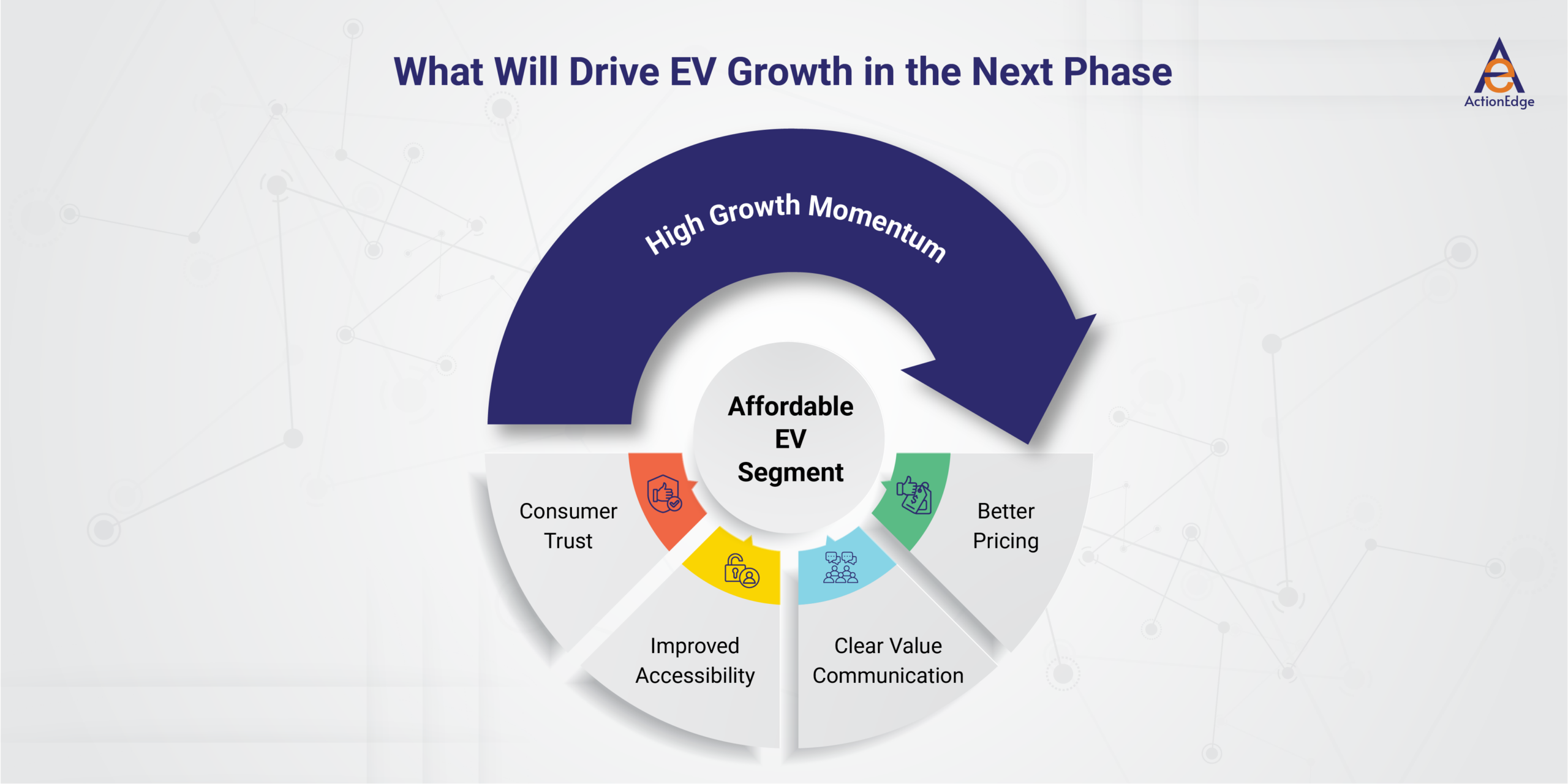
One of the biggest gaps in the market is the disconnect between consumer expectations and brand offerings.
Many consumers are open to EVs but struggle to see clear value in pricing. While they understand the long-term benefits, the upfront investment often feels difficult to justify.
There is also a communication gap. Information around charging, battery life, and maintenance is often unclear or overly technical. As a result, consumers feel uncertain and delay decision-making.
The real opportunity lies in simplifying the narrative and addressing real concerns. The affordable EV segment, in particular, holds significant potential. Brands that can combine accessibility with clear value propositions are likely to gain a competitive edge.
A robust market research approach for automotive industry can help brands identify these gaps, refine pricing strategies, and align offerings with real consumer needs.
Role of Advanced Research Methodologies
Understanding the EV vs ICE shift requires deeper, more adaptive research approaches.
In-depth interviews (IDI) play a crucial role in uncovering emotional drivers, hidden concerns, and decision triggers that surveys alone cannot capture. These conversations often reveal the “why” behind hesitation or interest.
Phone-to-web research (P2W) enables respondents to interact with product concepts, features, or digital interfaces while providing real-time feedback. This creates a more immersive and engaging research experience.
Taking this further, phone-to-web research via Screen access (P2W SA) allows researchers to observe how users navigate configurators, apps, or websites. This provides a clearer understanding of usability challenges and decision friction points.
When combined with behavioral data and real-time validation, these approaches form the foundation of hybrid market research, delivering both scale and depth.
How ActionEdge Can Help Automotive Brands
Navigating the EV transition requires more than surface-level insights. It demands a deep understanding of consumer behavior.
At ActionEdge, we specialize in delivering research that goes beyond data. Our approach to automotive consumer research focuses on uncovering the “why” behind decisions, not just the “what.”
We help brands test concepts, validate pricing, and refine product strategies through advanced methodologies such as IDIs and P2W-SA. Our market research service enables real-time feedback and actionable insights that directly impact business decisions.
From identifying barriers to uncovering untapped opportunities, we support brands in building strategies that align with evolving consumer expectations.
Conclusion
The EV vs ICE debate is not about one replacing the other overnight. It is about a gradual shift shaped by trust, experience, and real-world practicality. Consumers are moving forward, but carefully. They are evaluating, comparing, and waiting for the right moment to switch.
For brands, this presents both a challenge and an opportunity. The challenge is to address concerns, remove barriers, and build confidence. The opportunity lies in understanding consumers deeply and responding with relevance through automotive market research that captures evolving expectations and purchase behavior.
Those who invest in insight-driven strategies today will not just keep up with the transition; they will lead it.
ActionEdge supports brands with tailored research solutions, helping decode consumer sentiment, test strategies, and make smarter decisions in a rapidly changing mobility landscape.
Frequently Asked Questions
Automotive market research helps brands understand the differences between EV and ICE buyers, including purchase motivations, pricing expectations, charging concerns, fuel preferences, and technology adoption. Through automotive consumer research, companies can identify changing customer behavior and create products, messaging, and experiences that better match market demand.
In order to better understand the EV customer journey at each digital and offline touchpoint, companies have begun utilizing hybrid market research and omnichannel strategies. Hybrid Market research combines surveys, behavior, and automotive consumer research, providing insight into developing strategies for improving EV customer engagement and EV adoption.
Methods such as in-depth interviews (IDI), online surveys, and phone to web research (P2W) are highly effective for understanding EV and connected vehicle consumers. Advanced approaches like phone to web research via Screen access (P2W SA) also help capture real-time feedback during digital interactions and vehicle evaluations.
As a global provider of Market research for automotive industry, ActionEdge Research Services maintains strong data quality through respondent validation, structured workflows, and experienced fieldwork management across international markets. This helps ensure accurate and reliable automotive insights.
Automotive and mobility brands partner with ActionEdge Research Services for scalable Market research service solutions tailored to evolving industry needs. From automotive market research and hybrid market research to in-depth interviews (IDI) and phone to web research (P2W), the company delivers actionable insights that support smarter business decisions.