
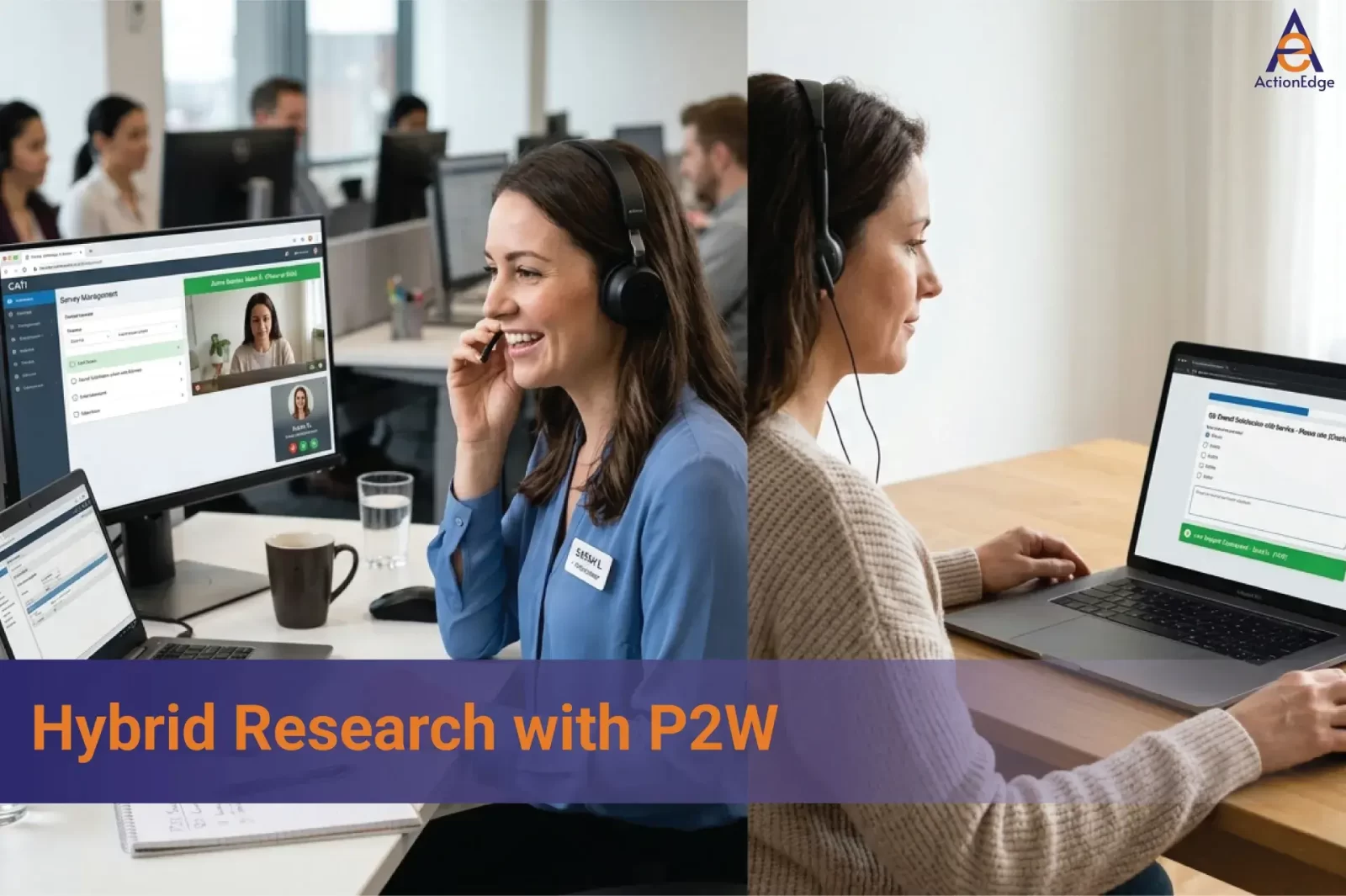
What happens when the speed of online surveys meets the accuracy of human interaction?
Modern research is moving in that exact direction.
For years, companies relied on traditional methods for market research and surveys, choosing between telephone interviews and online questionnaires. Phone interviews offered better engagement but were costly, while web surveys were fast but often struggled with low response rates and limited control over the sample.
Today, research projects are more complex than ever. Businesses operate across multiple countries, target highly specialized audiences, and expect precise, reliable insights before making decisions. Because of this shift, organizations are moving toward hybrid approaches that combine multiple data collection methods rather than relying on a single method.
Recent industry studies from global research associations show that multi-mode data collection delivers higher response quality and more representative samples than single-mode surveys. This growing demand for accuracy and flexibility has led to the rise of Phone-to-Web (P2W) research, a method that blends phone interaction with online surveys to improve both engagement and data quality.
Hybrid research is no longer an alternative. It is becoming the new standard.
Recent methodological work by national statistical agencies shows that multi‑mode designs that start with online surveys and then use phone or face‑to‑face follow‑up deliver higher response rates and better coverage than web‑only approaches. Statistics Canada, for example, now treats mixed‑mode sample designs as standard practice, using cheaper web modes first and reserving more expensive phone or in‑person modes for low‑response subsamples to maintain representativeness and reduce bias.
Similarly, an experimental comparison of telephone and web surveys found that a mixed‑mode telephone‑and‑web design increased response rates by roughly 25% compared with telephone only and by about 12% compared with web only, demonstrating how combining phone‑initiated contact with web‑based completion can significantly improve participation and sample quality.
What is Hybrid Research?
Hybrid research refers to a structured approach that combines multiple data collection methods within a single study. Instead of choosing between phone, web, or in-person interviews, researchers use multiple channels to reach the right respondents in the most effective way.
This approach is often part of a mixed-mode market research methodology, in which respondents can complete surveys via different modes depending on their availability, location, or preference.
For example, a study may start with online surveys and then follow up with phone calls to reach decision-makers who did not respond online. In other cases, respondents may receive a survey link during an interview, creating a more guided and controlled experience.
Because of these advantages, hybrid approaches have become an essential part of modern market research service offerings, especially for global and B2B projects.
Understanding Phone-to-Web Research
One of the most effective methods used in hybrid studies is Phone-to-Web (P2W) research.
In this approach, respondents are contacted by phone and guided to complete a web-based questionnaire instead of answering all questions verbally. The interviewer stays connected while the respondent completes the survey, ensuring clarity and accuracy.
An advanced version of this method is Phone-to-Web via Screen Access, which allows the interviewer to assist respondents in real time while they complete the questionnaire online. This creates a more controlled environment while still benefiting from the flexibility of web surveys.
By combining human interaction with digital data collection, this method improves both response quality and efficiency.
Why Phone-to-Web is Becoming Essential in Hybrid Research
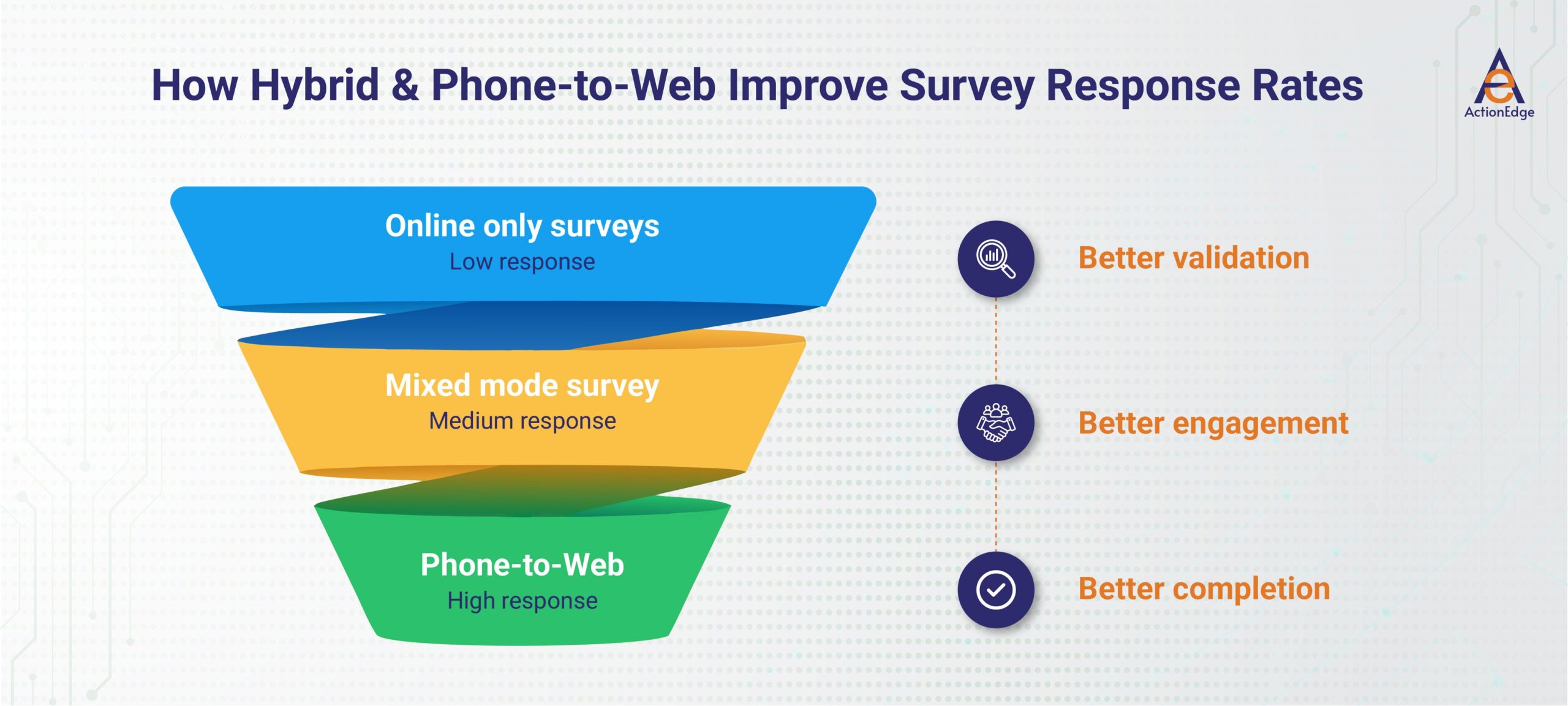
Modern behavior‑based studies show that phone‑assisted survey methods outperform text‑only or email‑only web invitations, even when the instrument itself is identical. In a 2023 survey‑practice study comparing text‑to‑web (SMS link) and phone‑assisted administrations, both paths achieved similar overall response rates, but phone‑assisted respondents reported higher engagement and more consistent, complete answers on key outcome items, underscoring the value of human‑guided completion.
A broader review of internet‑based surveys also concludes that hybrid designs combining email‑web invitations with phone follow‑ups lead to higher response rates and faster fieldwork completion than web‑only campaigns, while reducing non‑response bias and improving data reliability. This reinforces the idea that Phone‑to‑Web is not just a channel switch, but a quality‑enhancing hybrid touchpoint within the research journey.
As research requirements grow more demanding, Phone-to-Web is becoming a key part of Hybrid studies.
Higher Response Rates
Online surveys alone often suffer from low participation, especially among professionals and decision makers. Starting with a phone call builds trust and encourages respondents to complete the questionnaire.
Better Sample Validation
Phone interaction allows interviewers to confirm respondent eligibility before the survey begins. This ensures the right people participate, which is critical in B2B and professional research.
Improved Data Quality
Complex surveys can lead to confusion when completed without guidance. Phone support keeps respondents engaged and reduces errors.
Cost Efficiency
Compared to full phone interviews, Phone-to-Web reduces interview time while maintaining quality, making it a cost-effective solution.
Accessibility for Hard-to-Reach Audiences
Senior executives, healthcare professionals, engineers, and other specialists are less likely to respond to web-only surveys. Phone contact makes it easier to reach these audiences.
Because of these benefits, Phone-to-Web is often included in a mixed-mode survey design when data accuracy is important.
Key Use Cases for Phone-to-Web in Hybrid Research
Phone-to-Web is widely used across different industries and research types.
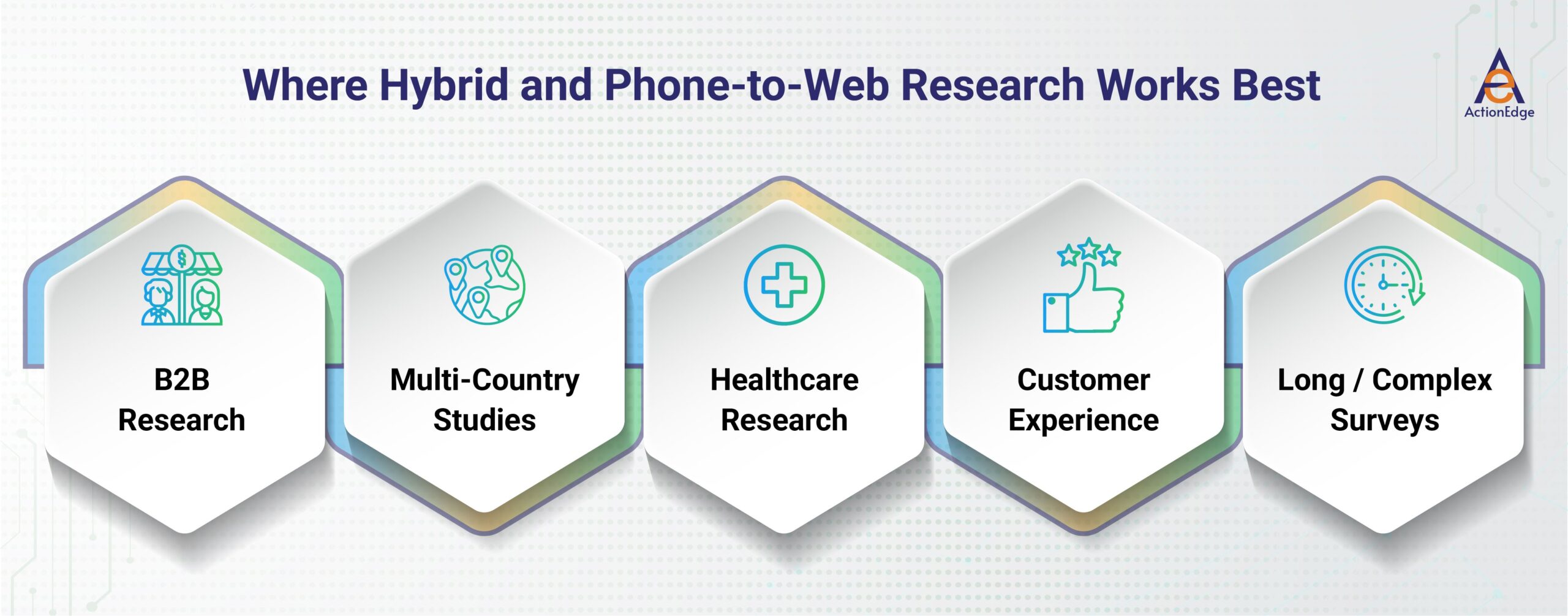
B2B Research
Busy professionals often ignore online survey invitations. Phone contact helps establish credibility and ensures participation, which is why many providers offering B2B Market research service use this approach.
Multi-Country Studies
Global research requires consistent quality across markets. Phone-to-Web allows researchers to maintain control while adapting to regional differences.
Healthcare and Professional Research
Specialized audiences usually require personal contact before agreeing to participate. Phone guidance makes surveys easier to complete.
Customer Experience Studies
Long feedback surveys often lead to high dropout rates. Phone assistance helps respondents complete the questionnaire without confusion.
Long or Complex Surveys
Technical or detailed questionnaires benefit from interviewer guidance, reducing errors and improving completion rates.
The Role of Technology in P2W Growth
Technology has made hybrid research easier to manage than ever before.
Modern survey platforms allow interviewers to send survey links instantly while staying connected on the phone. Real-time tracking ensures responses are recorded accurately and that respondents do not encounter technical issues.
Features such as live assistance, secure links, and screen sharing make Phone-to-Web via Screen Access especially useful for complex research projects.
These tools allow researchers to manage large samples, multiple countries, and specialized audiences while maintaining consistent quality standards.
The Future of Hybrid Research
The future of research is not about choosing one method over another. It is about combining methods in the smartest way possible.
Organizations are increasingly adopting Hybrid market research models that blend phone, web, and digital tools to reach different types of respondents. This approach improves response rates, reduces bias, and produces more reliable insights.
Some participants prefer online surveys, while others respond better to personal interaction. Hybrid models ensure that every important audience can be reached.
As research becomes more global and data-driven, flexible methods like Phone-to-Web will continue to play a major role in delivering accurate insights.
ActionEdge Phone-to-Web via Screen Access: A Smarter Hybrid Research Approach
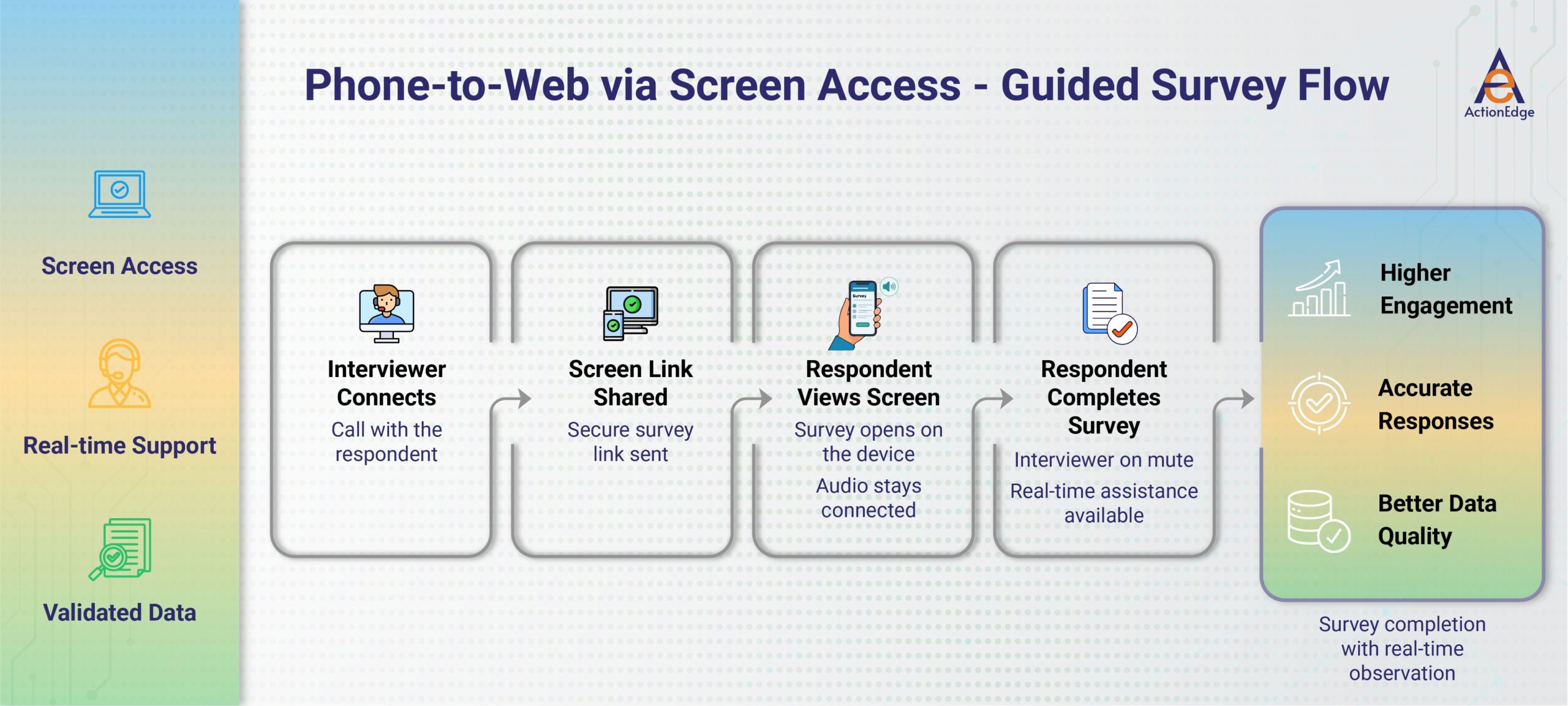
A more advanced form of hybrid data collection is Phone-to-Web via Screen Access, a method designed to improve both response quality and survey accuracy.
In this approach, the interviewer shares their screen with the respondent so they can respond to survey questions directly via the survey link. This innovative method allows the interviewer to connect with the respondent through sight and sound during the interview, thereby significantly improving engagement.
This approach is particularly effective for B2B studies, multi-country projects, and surveys that involve technical or detailed questionnaires.
By combining interviewer support with digital surveys, this method reduces dropouts, improves validation, and delivers higher-quality data compared to web-only or phone-only approaches.
Conclusion
Research has moved beyond the limitations of single-mode surveys. Today, organizations need flexible approaches that can reach the right respondents, maintain high data quality, and remain cost-efficient at the same time.
Hybrid research has become the preferred model because it combines the strengths of phone interaction and online surveys. Within this model, Phone-to-Web plays a critical role by improving response rates, strengthening validation, and supporting complex research designs.
As studies become more global and specialized, choosing the right methodology can directly impact the accuracy of insights and the confidence behind business decisions.
Partnering with an experienced provider offering advanced hybrid approaches and a reliable market research service can help organizations achieve better response quality, stronger sample control, and more dependable research outcomes.