
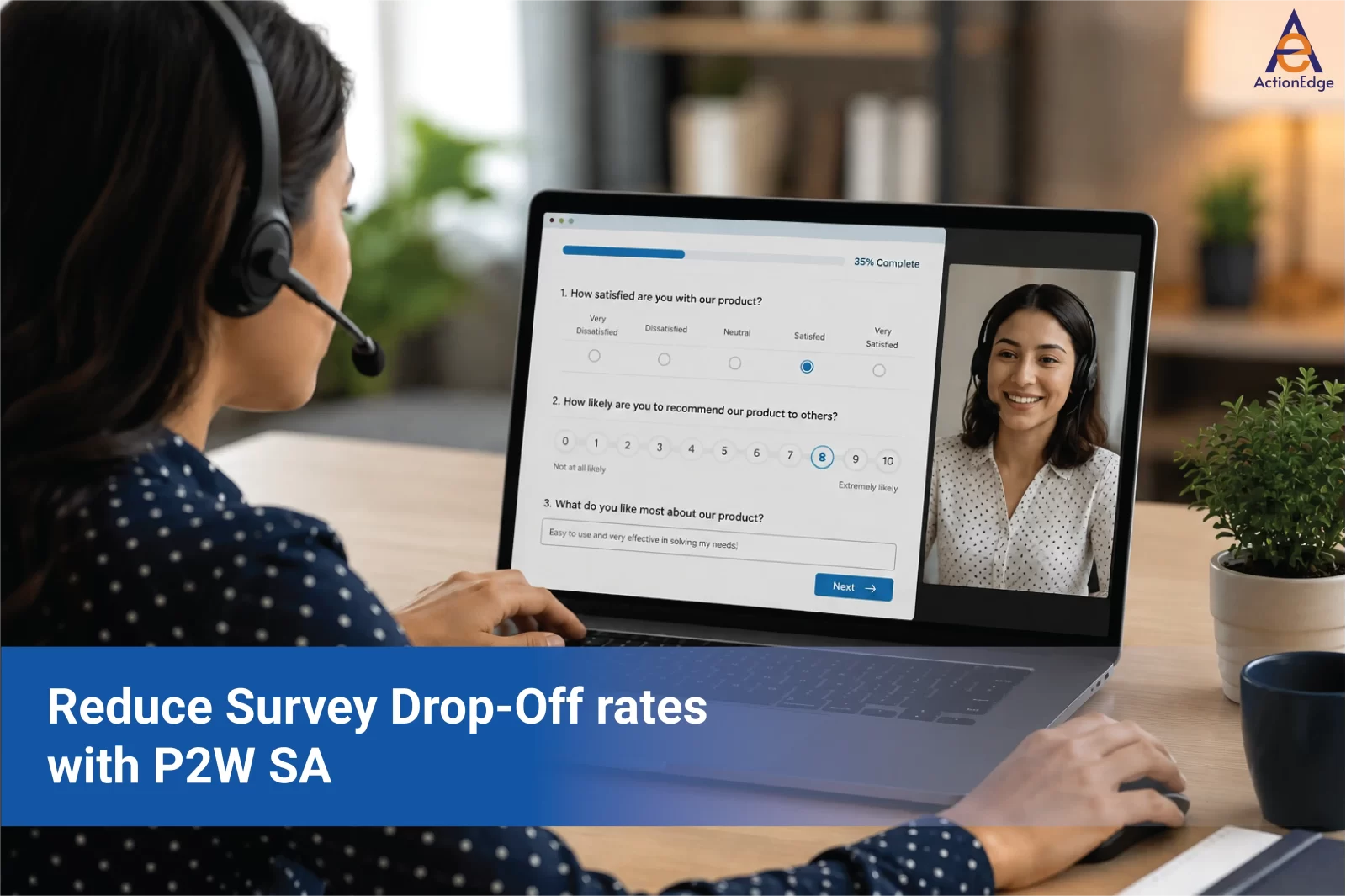
A survey can have the right audience, the right questions, and a strong research objective, yet still lose valuable respondents halfway through.
That is the challenge behind survey drop-off rates. When respondents start a questionnaire but abandon it before completion, researchers may lose more than a completed response. They can lose critical insights, introduce sample bias, and spend additional time and resources replacing respondents.
As surveys become more complex and increasingly mobile, researchers are looking for ways to make participation easier without sacrificing data quality. One approach gaining attention is Phone-to-Web via Screen Access, which combines human guidance over the phone with the flexibility of an online survey experience.
Why Survey Drop-Off Is a Growing Problem
Survey drop-off occurs when a respondent begins a survey but leaves before answering all required questions. While some abandonment is inevitable, consistently high abandonment can signal problems with the questionnaire or the respondent experience.
Common causes include:
- Long or complicated questionnaires
- Poor mobile experience
- Confusing instructions
- Technical difficulties
- Repetitive questions
- Lack of engagement
- Difficulty understanding complex concepts
For example, imagine a B2B research study asking professionals to evaluate several product concepts. Explaining five different concepts, rating scales, and visual attributes verbally over a phone call can become tiring. A respondent may lose interest simply because the experience requires too much mental effort.
This can affect both the survey completion rate and the quality of the responses that do come through. Improving the experience is therefore not just about getting more completes. It is about making it easier for the right respondents to provide thoughtful answers.
What Is Phone-to-Web via Screen Access?
Phone-to-web via screen access connects two familiar research modes: interviewer-led phone conversations and self-completed online surveys.
The process is relatively straightforward. A respondent initially interacts with an interviewer over the phone. Rather than completing the entire questionnaire verbally, the interviewer guides the respondent to access a web-based survey on their own device.
Once connected, the respondent can see and interact with the survey directly on their screen. They can read questions, select answers, view images, use rating scales, and interact with other research stimuli.
In simple terms, it brings together the personal interaction and reach of CATI with the flexibility of CAWI.
The goal is not simply to move respondents from a phone call to a website. It is to create a smoother research journey where the interviewer provides support when needed, while the respondent can interact directly with the survey.
Why Traditional Surveys Can Experience High Drop-Off
Traditional approaches can create friction, particularly when the questionnaire is lengthy or visually complex.
During long phone interviews, respondents can become distracted or lose interest. This is particularly relevant for busy professionals participating in B2B research.
Some questions can also be difficult to communicate verbally. Consider a study testing an advertisement. Asking respondents to imagine an advertisement from a verbal description is very different from allowing them to see the actual creative and provide feedback.
The same applies to:
- Product packaging
- Concept designs
- Website layouts
- Pricing displays
- Rating scales
- Videos and advertisements
- Product comparisons
Another issue is channel switching. If respondents are suddenly asked to open a survey without clear instructions, they may become confused or abandon the activity altogether.
How Screen Access Helps Reduce Survey Drop-Off
This is where Phone-to-Web via Screen Access can make a meaningful difference.
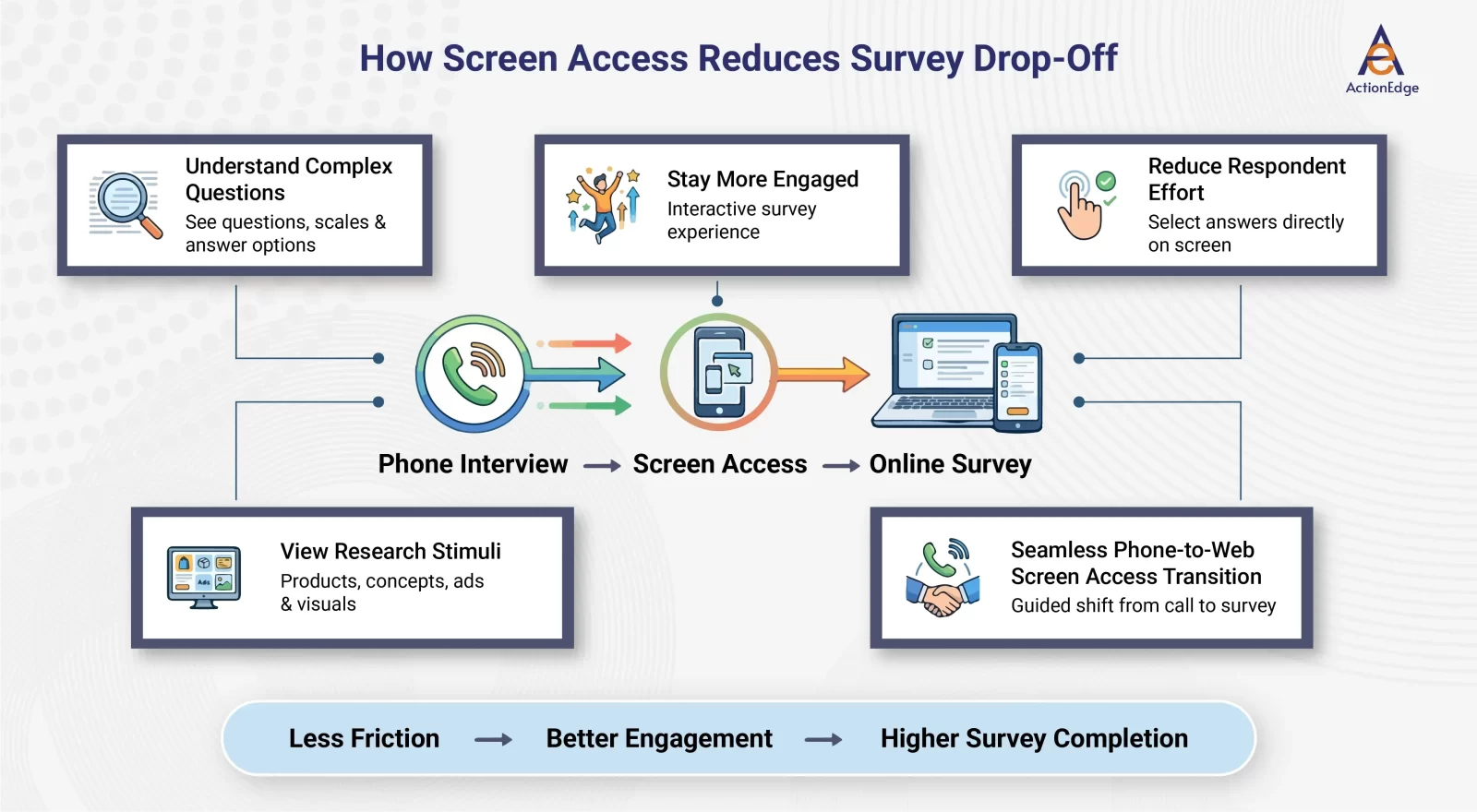
Makes Complex Questions Easier to Understand
Some research questions are simply easier to answer when respondents can see them.
Instead of verbally describing a 1-to-10 scale or reading out multiple answer choices, respondents can view the options directly. This can reduce cognitive effort and make the questionnaire easier to navigate.
Creates a More Engaging Experience
Respondent engagement can decline when participation feels repetitive. An interactive online environment can make the experience more dynamic, particularly when respondents need to interact with different question formats or stimuli.
A respondent evaluating three product concepts, for instance, can move between the concepts on screen rather than relying entirely on verbal explanations.
Reduces Respondent Effort
With a traditional phone survey, respondents may need to verbally communicate every answer. Screen access allows them to select responses themselves.
This can make the process feel more natural and give respondents greater control over their answers, while the interviewer remains available to guide them through the process.
Supports Visual Research Stimuli
Visual stimuli are particularly valuable in concept testing, advertising research, packaging studies, UX research, and product research.
Instead of asking respondents to imagine what they are being shown, researchers can present the actual stimulus on screen. This can lead to more informed and contextually relevant feedback.
Creates a Seamless Phone-to-Web Screen Access Transition
The transition works best when respondents understand exactly what is happening.
An interviewer can explain the next step, guide the respondent through accessing the survey, and remain available if technical assistance is required. The respondent therefore does not feel as though they have suddenly been handed a completely separate research task.
Best Practices for Implementing Phone-to-Web Screen Access
Technology alone will not solve abandonment. The entire respondent journey needs to be designed carefully.
Keep the transition simple
Give respondents short, clear instructions before moving them online. Avoid unnecessary technical steps.
Use mobile-friendly surveys
Most respondents may access the survey from a smartphone. Pages should load quickly, buttons should be easy to use, and content should display correctly across devices.
Minimize unnecessary questions
Every additional question adds potential friction. Keep the questionnaire focused on the research objectives.
Use clear visual instructions
Respondents should immediately understand what they need to do on each screen. Complicated navigation can quickly undermine engagement.
Monitor respondent behavior
Identify the questions or stages where participants frequently leave. These patterns can reveal problems that may not be visible from completed responses alone.
Train interviewers properly
Interviewers should understand how to guide respondents through the transition without leading or influencing their answers. Their role is to facilitate participation, not shape responses.
Measuring Whether Drop-Off Has Improved
A successful implementation should be measurable. Researchers can compare results from screen access studies with previous approaches using indicators such as:
- Survey completion rate
- Survey drop-off rate
- Average completion time
- Question or stage where respondents leave
- Phone-to-web screen access conversion rate
- Respondent engagement
- Survey response rate
These metrics can help determine whether the new approach is genuinely reducing friction or simply shifting respondents between research modes.
For example, if respondents complete a complex questionnaire more frequently after moving from a phone-led format to a screen-assisted experience, that provides useful evidence that the change is improving the respondent journey.
This is where real-time survey data collection can also help research teams monitor progress and identify potential issues while fieldwork is underway.
Conclusion
Reducing abandonment is not about making every survey shorter. Some research questions naturally require depth, detailed evaluation, or interaction with multiple stimuli.
The bigger opportunity is to remove unnecessary friction.
Phone-to-web via screen access can help researchers make complex surveys easier to understand, improve respondent engagement, and create a more intuitive participation experience. Rather than treating CATI and CAWI as competing approaches, researchers can combine their strengths through multi-mode research and multi-mode data collection.
For organizations looking to strengthen survey data collection, choosing the right methodology can make a meaningful difference. As a global market research company, ActionEdge Research Services provides CATI, CAWI, Phone-to-Web screen access, and other data collection services designed around different research requirements.
If you’re exploring how to reduce survey drop-off rates, connect with ActionEdge to explore Phone-to-Web via Screen Access (P2W-SA) for your next research study.