
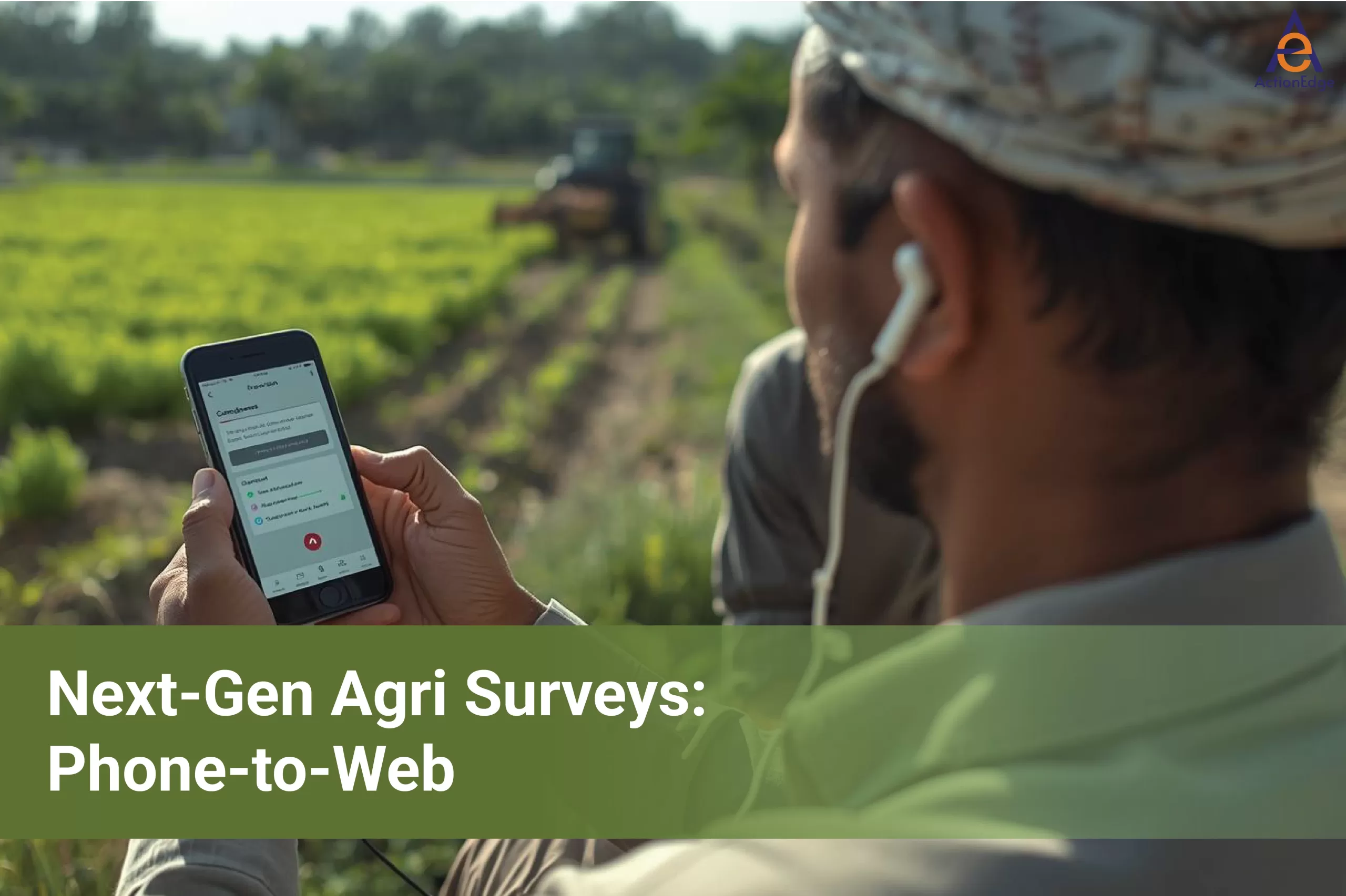
Agriculture runs on decisions that must be made at the right time. A farmer choosing fertilizer, a distributor planning inventory, or a government designing subsidy programs all rely on one thing: accurate data. In today’s fast-changing environment, agricultural market research has become more important than ever, yet collecting reliable information from farmers and agri-stakeholders remains one of the toughest challenges in the research industry.
Unlike urban consumers, agricultural respondents are often spread across rural and remote regions, speak different languages, and may not always be comfortable with digital surveys. Traditional phone interviews can capture opinions but often miss visual feedback. Online surveys allow richer data but may struggle with response rates in rural areas. These limitations have pushed many agricultural market research companies to seek smarter, more flexible approaches. USDA farmer surveys have declined sharply from 80–85% response rates in the 1990s to just 46% in 2024, highlighting the growing crisis in traditional data collection amid busy rural respondents.
This is where Phone-to-Web research is changing the way market research for agriculture industry is conducted. By combining human interaction with digital data collection, this hybrid method makes it easier to reach farmers, improve engagement, and capture more accurate responses without the high cost of fieldwork.
What Is Phone-to-Web Research?
Phone-to-Web research is a data collection method that blends traditional phone interviews with online surveys to create a more interactive and reliable research experience. It is part of modern hybrid market research, in which multiple data collection modes are combined to improve reach and quality.
In this approach, the process usually follows three simple steps.
First, the interviewer contacts the respondent through a phone call.
Second, a secure survey link is shared with the respondent via SMS, email, or messaging apps.
Third, the respondent opens the survey on their smartphone or device and completes it while staying connected with the interviewer if needed.
This method gives researchers the advantages of both CATI and online surveys. The interviewer can guide the respondent, while the web survey allows visual questions, product images, pricing comparisons, and structured responses. For any agricultural market research company, this combination helps reduce errors and improve completion rates.
Why Agricultural Market Surveys Are Challenging
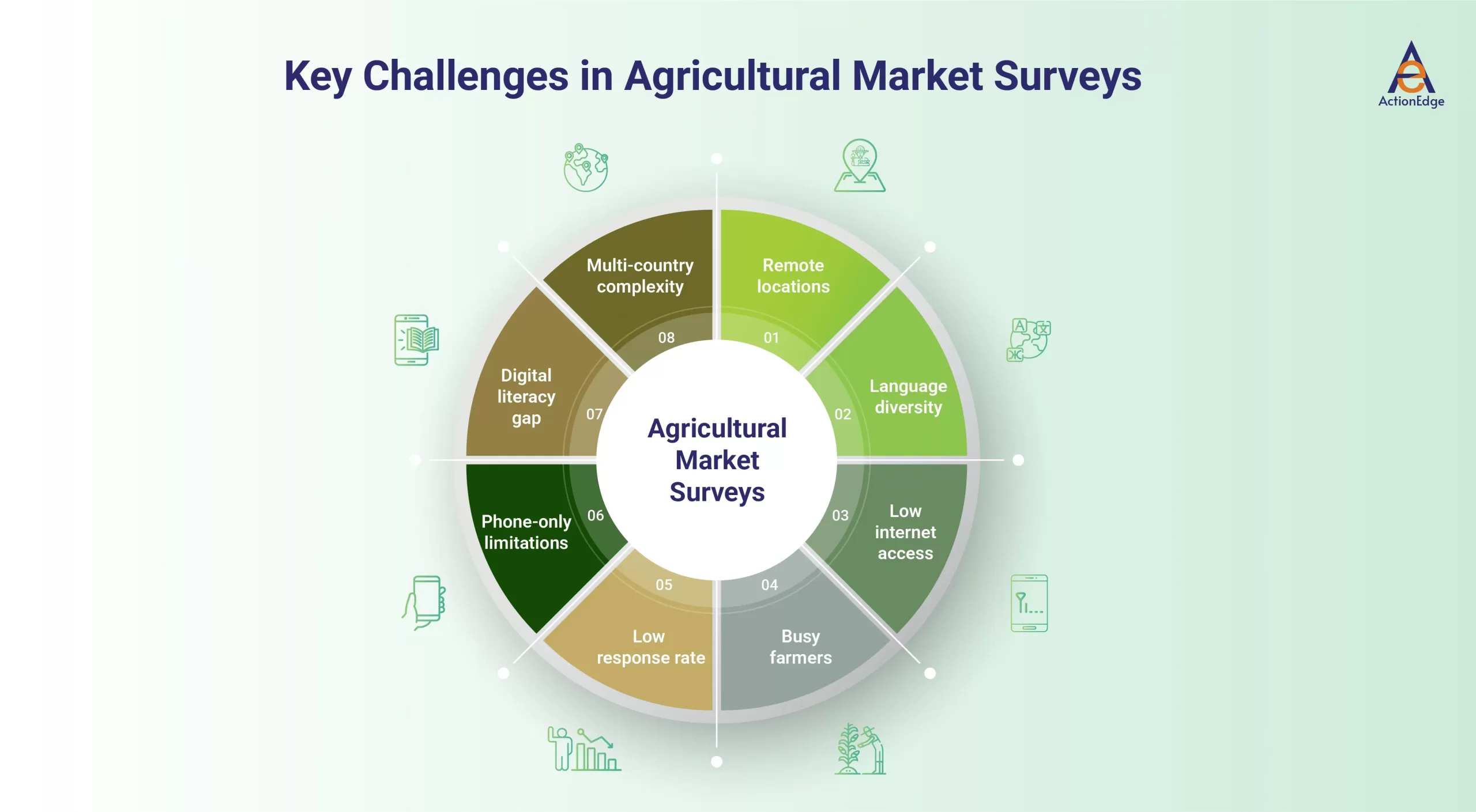
Conducting research in the agriculture sector is very different from surveying urban consumers or business professionals. Researchers working in agricultural market research often face obstacles that make traditional survey methods less effective.
One of the biggest challenges is reaching farmers in rural or remote locations. Internet connectivity may not always be stable, and respondents may not regularly check their email or participate in online panels.
Another issue is digital familiarity. Some respondents are comfortable speaking on the phone but may hesitate when asked to complete an online survey independently. Language diversity also plays a major role, especially in large countries where multiple regional languages are spoken.
Response rates can also be low with standalone online surveys. Farmers may ignore links from unknown sources, or they may not have time to complete long questionnaires without guidance. On the other hand, phone-only interviews may limit the ability to show product concepts, images, or detailed options, which can affect data accuracy. Recent studies confirm that mixed-mode surveys combining phone, web, and mail significantly improve response rates and data quality in agricultural research compared to standalone methods.
These challenges become even more complex in multi-country agricultural research, where differences in language, culture, and technology usage can impact the quality of responses.
Because of these factors, many organizations now rely on specialized market research service providers that combine technology with interviewer-led engagement.
How Phone-to-Web Methodology Works in Agricultural Research
The strength of Phone-to-Web methodology lies in its structured yet flexible workflow. It allows researchers to maintain human interaction while collecting digital data in real time.
The process usually starts with phone outreach to recruit respondents. Interviewers contact farmers, distributors, or agricultural professionals and explain the study’s purpose. This step helps build trust, which is essential in rural research. In farming communities studied by development researchers, phone-based advisory systems reached nearly 90% of farmers, with decision usage rising to 75%, proving that phone-led digital tools significantly improve engagement.
Once the respondent agrees to participate, the interviewer shares a secure web survey link through SMS, WhatsApp, or email. The respondent opens the survey on their smartphone or device while remaining connected to the phone.
If the respondent needs help understanding a question, the interviewer can guide them in real time. This support increases confidence and reduces survey drop-outs.
As the respondent answers the questions on the web interface, data is captured instantly in digital format. This eliminates manual entry errors and speeds up the entire research process.
For any modern market research company, this workflow provides the balance between personal interaction and digital efficiency that traditional methods often lack.
Key Benefits of Phone-to-Web for Agricultural Surveys
Phone-to-Web has become popular in market research for the agriculture industry because it solves many of the problems faced with phone-only or online-only surveys. FAO’s global agricultural data strategy highlights that fragmented survey systems reduce data reliability and recommends hybrid and modular research approaches to improve efficiency and accuracy across countries.
Higher Response Rates
Farmers are more likely to participate when they speak to a real interviewer first. The phone call builds trust and encourages respondents to complete the survey.
Better Data Quality
Web surveys allow researchers to show product images, packaging concepts, pricing options, and equipment visuals. This leads to more accurate feedback compared to voice-only interviews.
Reaching Hard-to-Access Respondents
Phone contact enables reaching respondents who may not respond to email surveys. This is especially useful in rural areas and emerging markets.
Cost Efficiency
Compared to face-to-face fieldwork, Phone-to-Web reduces travel, logistics, and on-ground interviewer costs while still maintaining high engagement.
Faster Data Collection
Since responses are captured digitally, researchers can monitor results in real time and complete projects faster.
For organizations conducting multi-country agricultural research, these benefits make Phone-to-Web one of the most practical and scalable approaches available today.
Real-World Applications in Agricultural Market Research
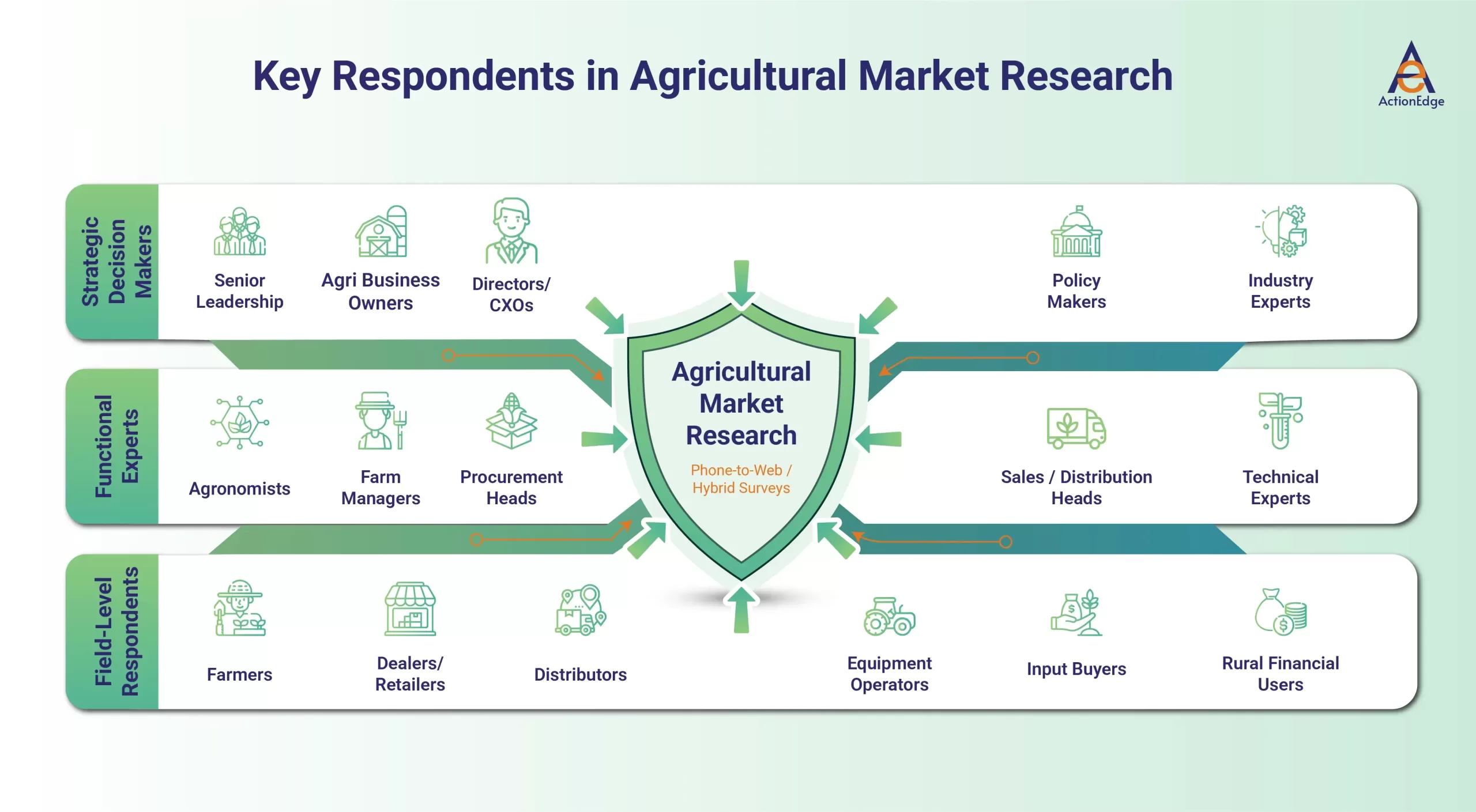
The flexibility of Phone-to-Web makes it suitable for a wide range of agricultural market research studies. Many agribusinesses, government agencies, and research firms are already using this method to collect reliable insights.
- Crop input and fertilizer usage studies often require farmers to compare different brands, prices, or packaging options. Showing these visually in a web survey improves response accuracy.
- Agricultural equipment adoption surveys also benefit from this approach, as respondents can view images or specifications before answering.
- Government agencies use Phone-to-Web for policy feedback studies, where farmers are asked to evaluate subsidy programs, training initiatives, or new regulations.
- Rural financial services research is another common use case. Banks and fintech companies use this method to understand how farmers use loans, insurance, and digital payments.
- Sustainability and climate impact studies also require detailed questionnaires, which can be difficult to complete over the phone alone. With web-based surveys, respondents can review questions carefully and provide more thoughtful answers.
Because of these advantages, many global agriculture market research companies now consider Phone-to-Web an essential tool for modern agricultural studies.
Conclusion
Agricultural research is evolving as quickly as the industry itself. Decisions about crops, equipment, finance, and sustainability require accurate insights, but collecting reliable data from rural and diverse populations has always been difficult. Traditional methods alone cannot meet the needs of today’s complex studies.
Phone-to-Web has emerged as a powerful solution that bridges the gap between human interaction and digital data collection. By combining phone interviews with online surveys, this approach improves response rates, enhances data quality, and reduces research costs. It also makes large-scale, multi-country agricultural research more practical for global organizations.
For businesses looking to strengthen their agricultural market research, working with an experienced market research service provider that understands hybrid methodologies can make a significant difference. The right market research company can help design studies that reach the right respondents, capture accurate insights, and support better decisions across the agriculture value chain.
Frequently Asked Questions
Agricultural companies are adopting Phone-to-Web research as part of Hybrid market research to reach farmers more effectively, making Agricultural market research faster, more flexible, and easier to manage across regions.
Phone-to-Web research improves response rates by combining phone interaction with online surveys, helping Agriculture market research companies engage farmers who may not respond to digital-only questionnaires.
Yes, Hybrid market research using Phone-to-Web research is highly effective for Multi-country agricultural research, allowing researchers to scale projects while maintaining data quality across different markets.
Market research for agriculture industry helps companies understand farmer needs, usage behavior, and purchase drivers, enabling better product positioning and stronger adoption strategies.
As an experienced Agriculture Market Research Company, ActionEdge works as a trusted Market research service provider delivering Agricultural market research solutions for global agribusiness through scalable and reliable research methodologies.