
Table of Contents
A decade ago, ESG reports were often treated as a compliance exercise. Companies published them once a year, highlighted a few sustainability initiatives, and moved on. Today, the situation is very different.
Investors now evaluate environmental performance before making funding decisions. Customers are increasingly choosing brands that align with their values, and employees prefer to work for organizations that demonstrate responsibility and transparency. In this environment, ESG reporting has moved from the sidelines to the center of business strategy. Recent industry data shows that nearly 98% of executives report progress toward their sustainability goals over the past year, highlighting the strong integration of ESG initiatives into corporate priorities.
This shift has also brought greater scrutiny. Sustainability claims are carefully examined by investors, regulators, and the public. Reports that lack credible evidence or clear transparency risk damaging brand reputation and weakening stakeholder trust.
As a result, organizations are recognizing the value of ESG market research. Instead of relying solely on internal data, companies are turning to structured research to understand stakeholder expectations and build ESG reports that are credible, relevant, and strategically aligned with business goals.
Understanding ESG in Today’s Business Environment
ESG stands for Environmental, Social, and Governance factors. These three pillars define how responsibly an organization operates and how it manages its long-term impact on society and the environment.
Environmental
The environmental component focuses on how businesses manage their ecological footprint. This includes carbon emissions, energy consumption, waste management, water usage, and sustainability initiatives such as renewable energy adoption.
Organizations are increasingly setting measurable targets to reduce emissions and improve resource efficiency. These commitments are now closely monitored by investors and regulatory bodies.
Social
The social dimension evaluates how companies interact with employees, customers, and communities. Topics include workplace diversity, employee well-being, data privacy, labor practices, and community engagement.
For many companies, social responsibility has become a key differentiator that influences brand loyalty and employer reputation.
Governance
Governance focuses on leadership accountability, ethical practices, and transparent decision-making. It covers board diversity, regulatory compliance, anti-corruption policies, and executive oversight.
Strong governance ensures that environmental and social commitments are implemented responsibly and communicated transparently.
Together, these three elements form the foundation of a robust corporate ESG strategy, helping organizations align sustainability efforts with long-term business value.
The Common Problem with ESG Reporting
Despite growing awareness of sustainability, many companies still struggle to produce meaningful ESG reports.
One common issue is the overreliance on internal metrics. Organizations often highlight operational achievements but fail to understand whether these initiatives truly matter to stakeholders.
Another challenge is the lack of an external perspective. Without feedback from customers, employees, investors, or communities, companies may misjudge which ESG topics deserve priority.
This disconnect can lead to ESG reports that fail to reflect stakeholder expectations. In some cases, it may even raise concerns about greenwashing if sustainability claims lack credible evidence. Recent studies indicate that nearly 85% of investors believe greenwashing is a growing concern, making transparency and data-backed reporting more important than ever.
These challenges demonstrate why sustainability market research has become an essential component of modern ESG reporting. By collecting insights directly from stakeholders, organizations can align their sustainability priorities with real-world expectations.
What Role Does Market Research Play in ESG?
Research provides a structured way for organizations to listen to their stakeholders. Instead of making assumptions, companies can gather evidence-based insights that guide ESG strategy and reporting. Recent findings suggest that nearly 70% of companies are able to extract real business value from ESG data when it is supported by structured reporting and analysis (PwC 2025).
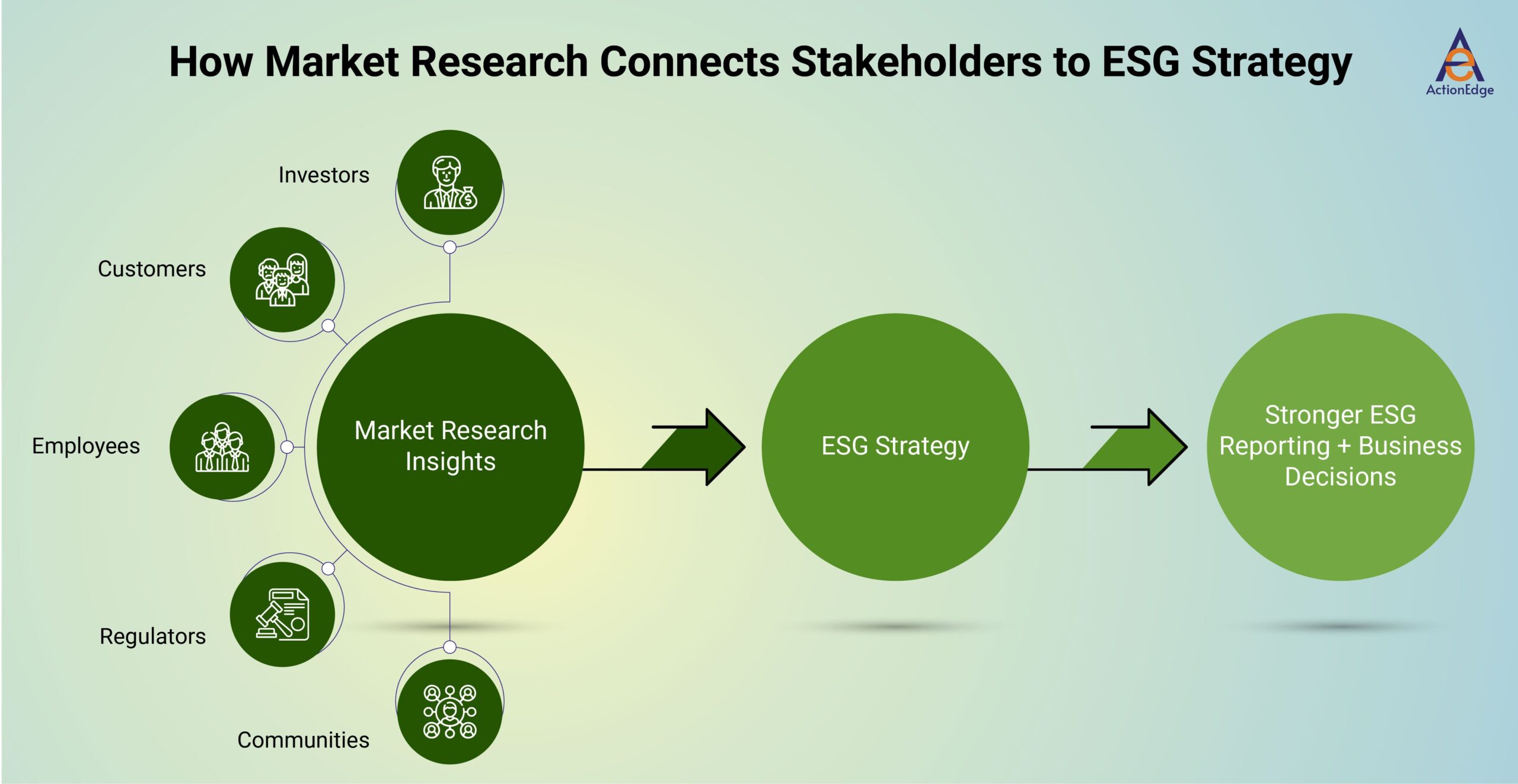
Climate reporting has increased significantly in recent years, with studies showing that nearly 55% of companies now disclose climate-related information, almost double the level reported in 2017. As ESG expectations grow, organizations need clearer insights into what truly matters to their stakeholders. Market Research in ESG helps organizations answer critical questions such as:
- Which sustainability issues matter most to stakeholders?
- How do customers perceive a company’s environmental efforts?
- What concerns do investors have regarding governance practices?
- How do employees evaluate workplace diversity and inclusion?
Through structured B2B Market Research, companies can engage decision makers, industry experts, and investors who influence ESG performance and reputation.
Organizations also increasingly rely on specialized b2b survey panels to reach senior professionals and stakeholders who can provide meaningful feedback on sustainability priorities.
The result is a clearer understanding of how ESG initiatives are perceived and where improvements are required.
How Market Research Strengthens ESG Reports
Market research does more than collect opinions. It helps organizations build ESG reports that are credible, transparent, and aligned with stakeholder expectations.
Identifying Material Issues
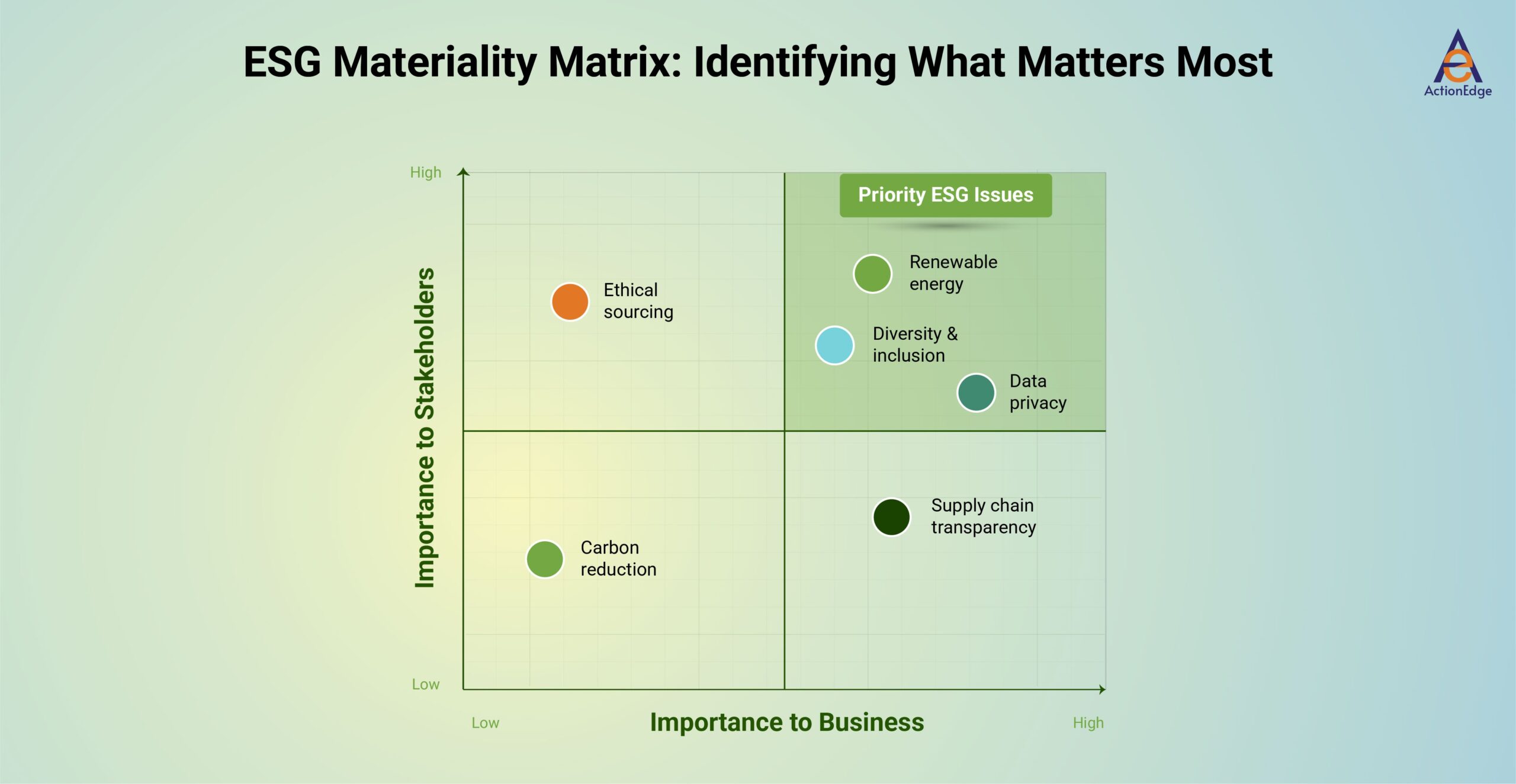
One of the most important outcomes of ESG market research is identifying material issues. These are the ESG topics that stakeholders consider most important.
Research helps companies prioritize areas such as climate action, responsible sourcing, or employee well-being based on stakeholder feedback rather than internal assumptions.
Improving Transparency
Stakeholder research encourages companies to address real concerns in their reports. This increases transparency and demonstrates that organizations are actively listening to their audiences.
Supporting Credibility
Data-backed insights strengthen ESG disclosures. When sustainability claims are supported by structured quantitative research, investors and analysts gain greater confidence in the report.
Enhancing Communication
Understanding stakeholder expectations allows organizations to communicate ESG initiatives more effectively. Research insights help companies frame sustainability achievements in ways that resonate with investors, customers, and employees.
In simple terms, research answers a key strategic question: how market research improves ESG reporting strategy by ensuring that reports reflect the priorities of the audiences that matter most.
Linking ESG Insights to Business Strategy
The most effective companies treat ESG insights as a strategic asset rather than a reporting requirement.
Research findings often influence broader business decisions. For example, if customers express strong concern about environmental impact, organizations may accelerate investments in renewable energy or sustainable packaging.
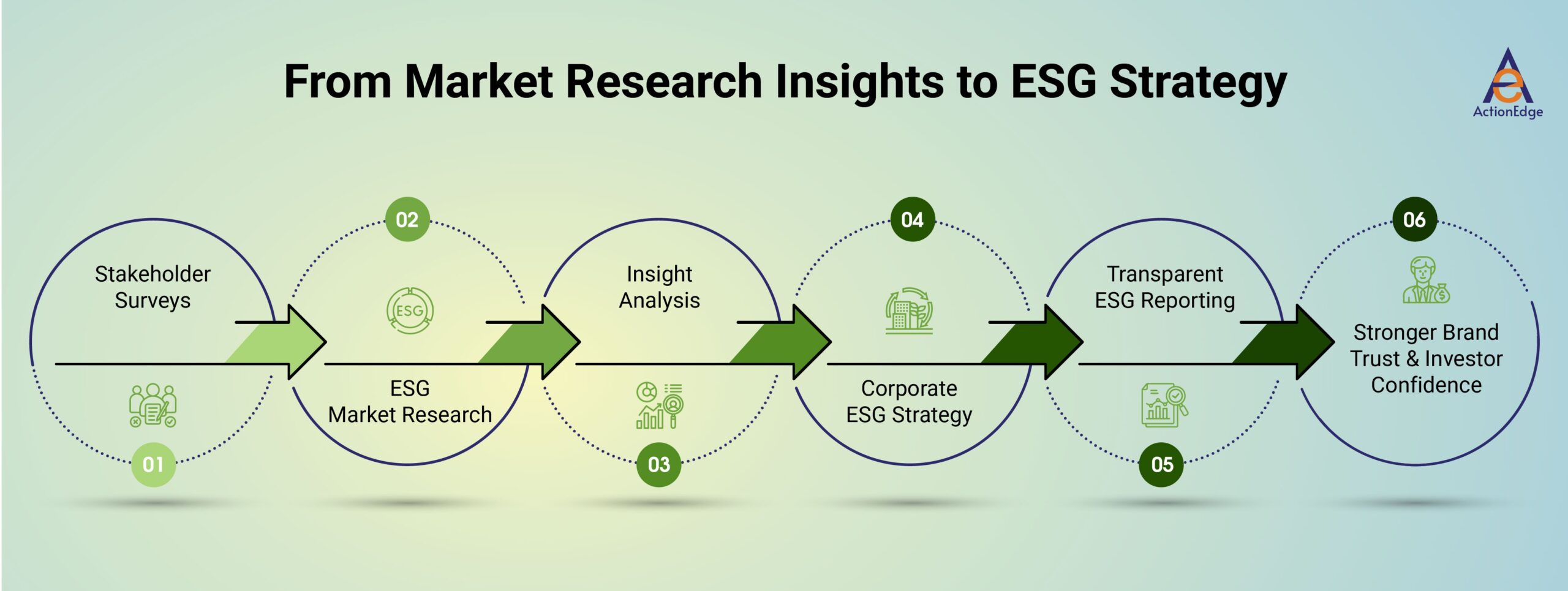
Similarly, employee research may highlight the importance of diversity initiatives, encouraging companies to expand inclusion programs or leadership development opportunities.
Insights generated through sustainability market research can help organizations:
- Prioritize sustainability investments
- Improve brand positioning around responsible business practices
- Reduce reputational risks linked to ESG controversies
- Strengthen stakeholder engagement and trust
- Support long-term growth strategies
When research insights are integrated into planning processes, ESG reporting becomes a reflection of genuine strategic progress rather than a communication exercise.
Primary Research Methods That Support ESG Strategy
Several research approaches help organizations gather meaningful insights for sustainability strategies.
Stakeholder Surveys
Structured surveys capture feedback from investors, partners, customers, and employees. These studies often use quantitative research techniques to measure perceptions and track changes over time.
In-Depth Interviews
Through qualitative research, organizations can explore stakeholder perspectives in greater depth. Interviews help uncover motivations, concerns, and expectations that may not emerge in structured surveys.
Employee Engagement Research
Internal surveys measure employee perceptions of workplace culture, diversity, leadership transparency, and sustainability initiatives. These insights help companies strengthen the social component of ESG.
Investor Sentiment Studies
Investors increasingly consider ESG performance when making funding decisions. Research helps companies understand investor priorities and refine disclosure strategies.
Community Impact Research
Organizations operating in multiple regions often conduct research with local communities to understand how their operations influence social and environmental outcomes.
Brand Perception Tracking
Tracking brand perception helps companies evaluate whether sustainability initiatives are improving trust and reputation.
Many of these initiatives fall under primary research in sustainability, where organizations collect first-hand insights from stakeholders rather than relying solely on secondary data.
Conclusion
ESG reporting has evolved into a strategic priority for modern organizations. Stakeholders expect transparency, accountability, and measurable progress across environmental, social, and governance initiatives.
However, building credible ESG reports requires more than internal data. Companies must understand how their actions are perceived by investors, employees, customers, and communities.
Market research provides the tools to capture these perspectives and transform them into actionable insights. From identifying material sustainability issues to strengthening stakeholder trust, research helps organizations design ESG strategies that are both authentic and impactful.
As sustainability expectations continue to grow, companies that integrate research into their ESG approach will be better equipped to make informed decisions, communicate transparently, and build long-term stakeholder confidence.
If your organization is looking to strengthen its sustainability initiatives and reporting, partnering with experienced research professionals can make the difference. Connect with ActionEdge to explore how expert ESG market research and strategic insights can support stronger sustainability decisions and long-term business success.
Frequently Asked Questions
Through the use of company/market-based stakeholder research on market-based sustainability claims (real/factual basis), ESG market research allows companies to demonstrate to stakeholders that ESG reporting has been communicated with stakeholders in an open manner that is validated by data, and meets the expectations of stakeholders.
ESG market research utilizes both qualitative and quantitative methods of research to assess trust levels, perceptions of sustainability, confidence in governance, employee sentiment, and overall stakeholder priorities, which in turn can be utilized by businesses to improve their ESG financial disclosures.
Building a strong framework includes collecting stakeholder-based insight, stakeholder perceptions, and stakeholder performance-based data from primary(s) research conducted in the areas of sustainability, B2B market research, and B2B structured sustainability research.
ESG market research will provide a corporation with stakeholder-driven information utilized to create or enhance its ESG corporate strategy. A corporation may be able to enhance its ESG Strategy through a deeper understanding of the components of market research, which enhance an organization’s ability to identify and prioritize its most pressing initiatives.
Some of the common ESG challenges include limited access to stakeholders, a lack of consistent sources of data to report on, and a lack of external validation of ESG data reported. These specific challenges can be overcome by utilizing B2B survey panels and both B2B quantitative and B2B qualitative research methods.
ActionEdge provides B2B ESG market research, B2B market research, and primary research related to sustainability through the use of global B2B survey panels and B2B qualitative and B2B quantitative research methods; therefore, ActionEdge expects to enable companies to produce accurate and scalable ESG reports.