

From credit cards to crypto wallets, the financial services world is evolving at an exponential pace. While legacy systems still hold the core, the edges are shifting fast. Credit is disappearing into seamless checkout flows, AI is taking on underwriting, and digital assets are gaining structure over speculation.
And yet, amid all the numbers and dashboards, what often gets missed is intent.
That’s exactly what emerged during a recent series of interviews conducted by ActionEdge with senior leaders across banking and financial services. These conversations went beyond adopting AI or strengthening cybersecurity. They uncovered critical trade-offs-how to accelerate transformation without losing control, and how to embed innovation without eroding trust.
These reflections rarely surface in performance data. They come alive when the right questions are asked through fieldwork. That’s why field research remains one of the most powerful tools for understanding financial behavior. It doesn’t just track what’s changing, it explains why.
In this piece, we will be exploring five major forces i.e., reshaping the financial industry: embedded finance, artificial intelligence, tokenized assets, ESG lending, and behavior-led personalization. Each trend carries its own momentum, but they all demand deeper understanding. Fieldwork doesn’t just follow change. It maps meaning.
1. Embedded Finance: Where Services Disappear into the Flow
Embedded finance is transforming how users experience financial services i.e., no longer as standalone products, but as features integrated into everyday platforms. Whether it’s a loan option at checkout or insurance offered within a booking app, financial services are now woven into the digital flow.
According to the World Economic Forum (citing Dealroom and ABN AMRO), the global embedded finance market is projected to reach USD 7.2 trillion by 2030 which is nearly equal to the combined market value of all current fintech startups and the top 30 global banks and insurers (figure 1). The Fintech Switzerland article further breaks down this estimate across insurance, lending, and payments, highlighting where this value is expected to emerge.
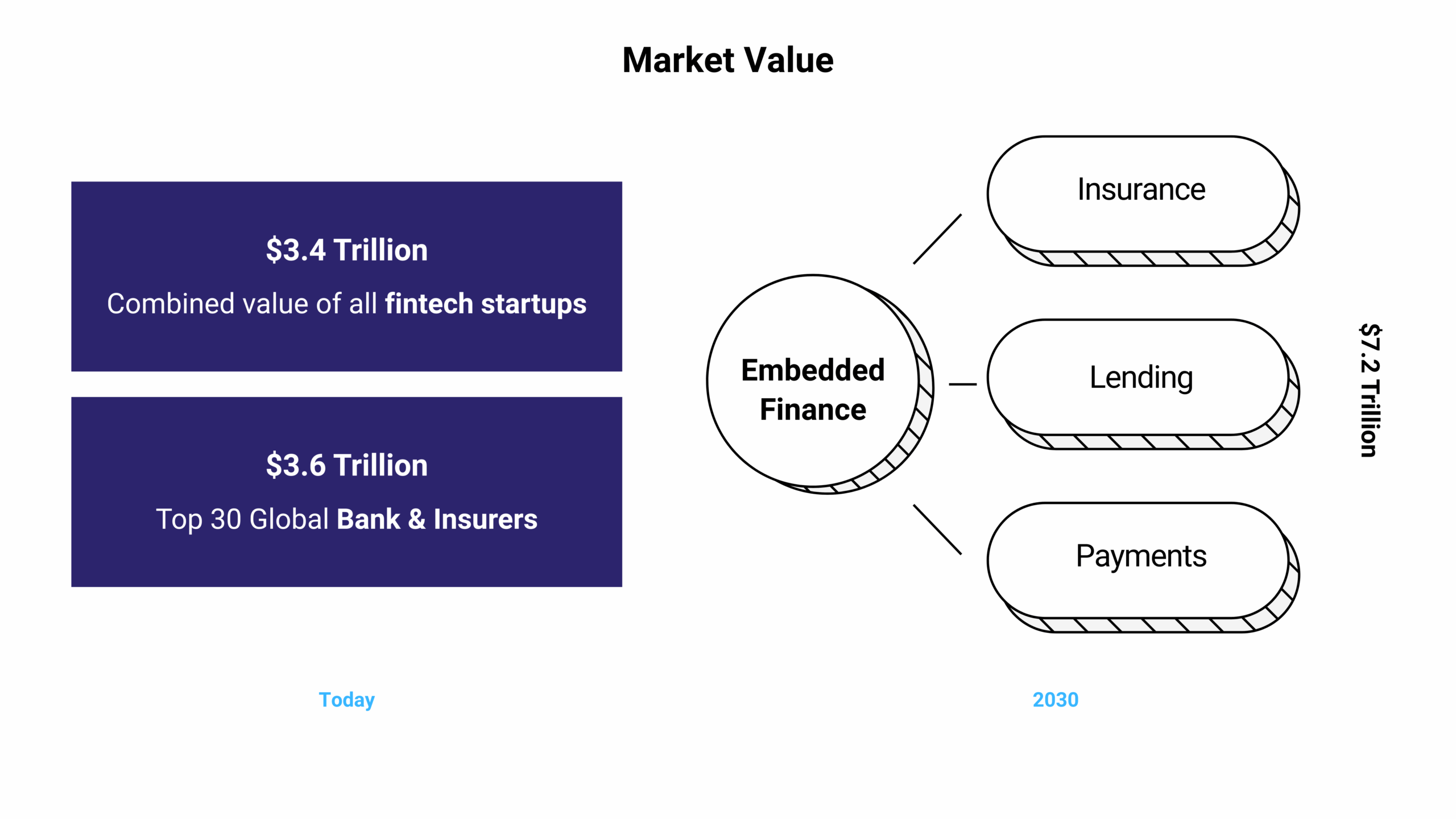
Zooming in, the MENA region reflects this global momentum: the embedded finance market is forecast to grow from USD 11.2 billion in 2024 to USD 37.7 billion by 2029 i.e. a more than threefold increase in just five years, underscoring the pace and scale of adoption.
2. AI in Banking & Finance: From Risk Models to Revenue Engines
Artificial Intelligence is rapidly moving from experimentation to execution across the banking and financial services landscape. What began as a tool to automate repetitive processes is now a strategic driver; enhancing everything from credit risk modelling to fraud detection, investment advisory, and customer experience.
According to the World Economic Forum’s 2025 white paper on Artificial Intelligence in Financial Services, financial institutions are now treating AI as a core capability rather than a side initiative. The report is based on input from over 100 senior executives highlighting how AI is being used to streamline decision-making, reduce operational errors, and support real-time risk analysis. But with that acceleration comes complexity. The WEF outlines major concerns around explainability, ethical use, and regulatory readiness particularly as generative AI becomes more mainstream in customer-facing roles.
At ActionEdge, our field interviews with BFSI technology leaders echo these priorities. While most executives see AI as essential to future growth, many also emphasize the need for governance frameworks, transparent algorithms, and human oversight. These deeper insights don’t show up in performance dashboards, but they surface clearly when leaders are engaged through the right research tools. That’s where our work begins which focuses on capturing not just adoption metrics, but the mindsets and questions behind them.
3. Crypto & Tokenized Assets: From Volatility to Structure
After years of volatility and speculation, the digital asset space is undergoing a strategic transformation. The focus is shifting from hype to infrastructure, with tokenized real-world assets (RWAs) emerging as the next major force in finance.
According to a 2024 report by BCG and Ripple, the value of tokenized RWAs is projected to reach USD 16 trillion by 2030 and potentially USD 19 trillion by 2033 (figure 2). These include tokenized property, private equity, bonds, and more, offering liquidity, transparency, and programmability to traditionally illiquid markets.
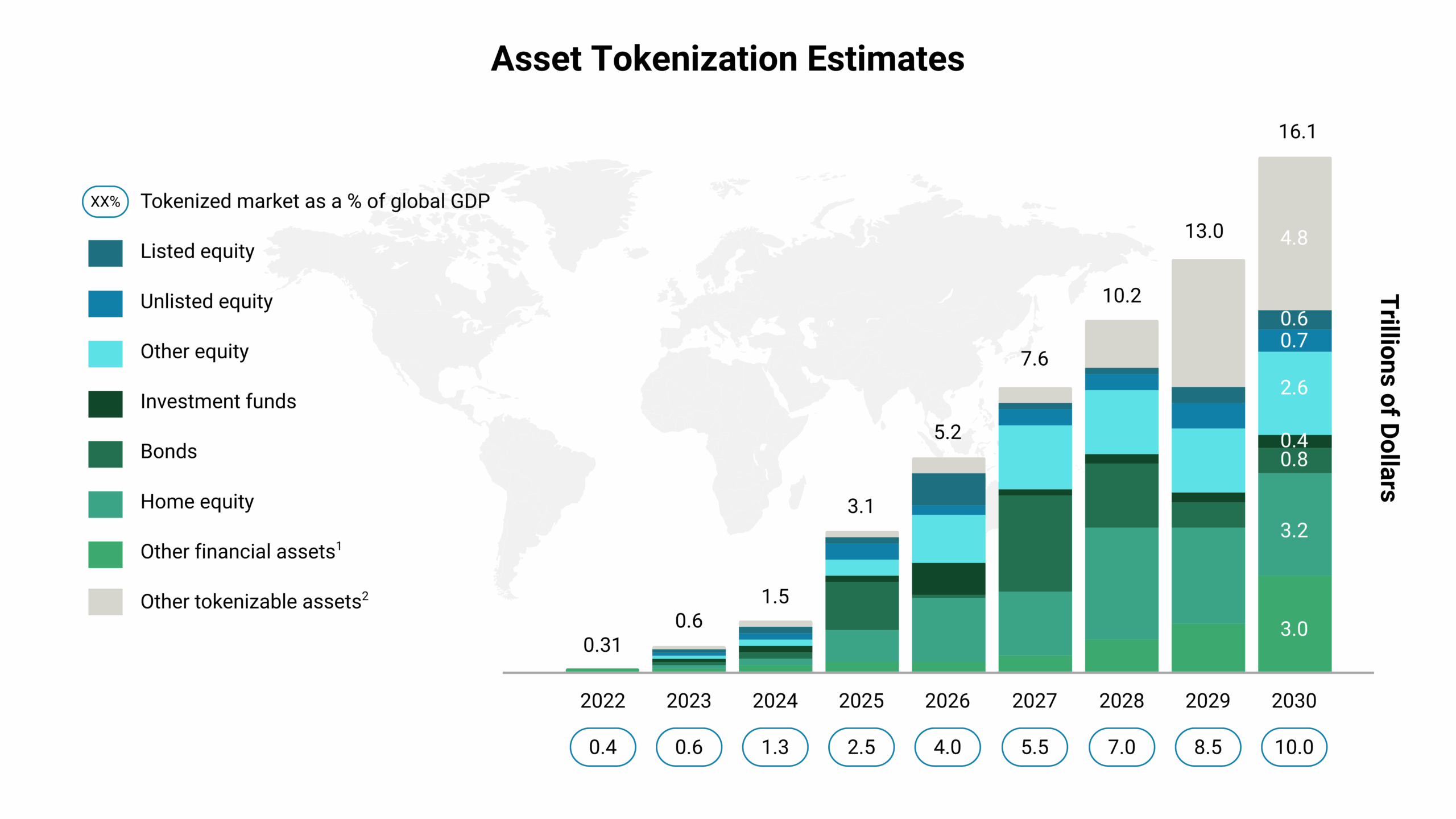
Investor interest is growing, especially among Gen Z and affluent retail segments. Early research suggests that a notable share of these investors is allocating a meaningful portion of their portfolios to digital assets not just for potential returns, but with expectations around platform security, seamless onboarding, and regulatory clarity. Trust in the ecosystem is now being shaped as much by user experience as by market performance.
4. Green Finance & ESG Integration: ESG as a Lending Lens
ESG has evolved from a compliance checkbox to a full-fledged decision-making lens. Across the financial world, climate and social considerations are no longer side notes: they’re influencing how capital is priced, assessed, and allocated. Lending is a prime example. Financial institutions are weaving ESG into credit models, underwriting standards, and investment policies. The shift is strategic: aligning portfolios with long-term sustainability while responding to growing stakeholder pressure.
But the real story isn’t just in frameworks or funding: it’s in what fieldwork reveals. Through IDI conversations with risk officers, sustainability leads, and borrowers, a new tension emerges:
- How do institutions balance ESG goals with returns?
- What makes an ESG product credible in the eyes of a borrower?
- And how are businesses adjusting to ever-evolving disclosure norms?
These are not spreadsheet questions but they’re behavior questions. And they don’t get answered in annual reports. They surface through human conversation.
5. Behavioral Personalization: Banking by Habit
Personalization in finance is no longer about generic segmentation or broad targeting. It has become a question of timing, context, and emotional relevance. Today’s users expect their financial providers to understand them-to anticipate their needs and respond in real time, not just record transactions.
The data reflects this shift. Recent study by Q2 and Harris revealed that nearly three out of four customers want more personalized digital services, even though few fully understand how these experiences are powered.
And yet, behind such expectations lies something deeper. In our field conversations with customer experience heads and innovation teams, a recurring insight stands out. Personalization only works when it feels natural. It must be experienced as value, not perceived as intrusion. This means the real challenge isn’t technical execution but trust.
That’s why behavior-led research is essential. It reveals what users won’t say in surveys or demonstrate in dashboards. By mapping routines, habits, and emotional signals, it uncovers the meaning behind the metrics. Because true personalization doesn’t just predict action. It understands intention.
What Fieldwork Adds: Beyond Dashboards to Decision-Making
Dashboards tell you what’s happening. Fieldwork reveals why.
At ActionEdge, we specialize in financial field research across global markets and segments capturing the human context that drives decisions. From fintech users and retail investors to compliance heads and CFOs, we engage the voices shaping the future of finance.
Through telephonic interviews, phone-to-web studies, and in-depth executive conversations, we uncover the behaviors, perceptions, and priorities behind the numbers. We don’t just collect data. We bring clarity.
Conclusion: Data Is the Fuel with Fieldwork as Engine.
As finance evolves from seamless payments and AI-powered lending to ESG credit and tokenized portfolios makes clarity as important as innovation. The challenge isn’t just keeping up. It’s knowing where to focus, what to act on, and why it matters.
Are your financial strategies grounded in real-world behaviour, or just shaped by what the surface data suggest?
At ActionEdge, we help financial institutions decode what drives decisions from institutional priorities to everyday user behavior. Our field research connects you with the insights that make change not just measurable but insightful too.
Share your priorities with us and let’s explore how data-rich fieldwork can power your next breakthrough.
Frequently Asked Questions
Research conducted on the ground is vital to understanding the rapidly evolving landscape of payments due to its ability to record the habits and experiences of real customers. Conducting FinTech and financial services market research provides brands with deeper insights that go beyond what can easily be inferred from traditional market research data.
In 2026, the way that consumers use payment methods is going to be altered by trends such as digital wallets, embedded finance, AI-driven personalization, and crypto adopters. This means that the importance of using AI for FinTech research and the evolution of market research for financial services is greater than ever.
Market research helps FinTechs understand the characteristics of their target audience by revealing the trust their potential customers have in their services, identifying barriers that may prevent consumers from adopting crypto as a payment method, and tracking how, when, and why consumers use crypto.
Undertaking research on digital payments and crypto-type payments may provide challenges, but those that arise from the various regulatory changes, issues of privacy, and trust should still be accounted for when attempting to produce strong FinTech market research. This research not only benefits brands but also assists them in identifying the changing market and provides them with actionable, up-to-date intelligence on their intended audience.
As a global Market research company, ActionEdge Research Services supports financial brands with tailored Market research services across payments and FinTech. From financial services market research to advanced AI in FinTech research, the company delivers insights that help businesses make confident decisions.