Some of the most valuable customer insights are hidden behind unanswered emails and ignored online questionnaires. When businesses need reliable answers from real people, a human conversation often makes all the difference.
This is where CATI Surveys become highly effective. As markets become more complex and audiences more selective, businesses are rediscovering the value of telephone-based research backed by modern technology.
In this blog, you’ll learn what CATI surveys are, why they continue to matter in 2026, their key advantages, common challenges they solve, and how combining them with other methods can deliver deeper insights for smarter decisions.
What Are CATI Surveys and Why Do They Still Matter in 2026?
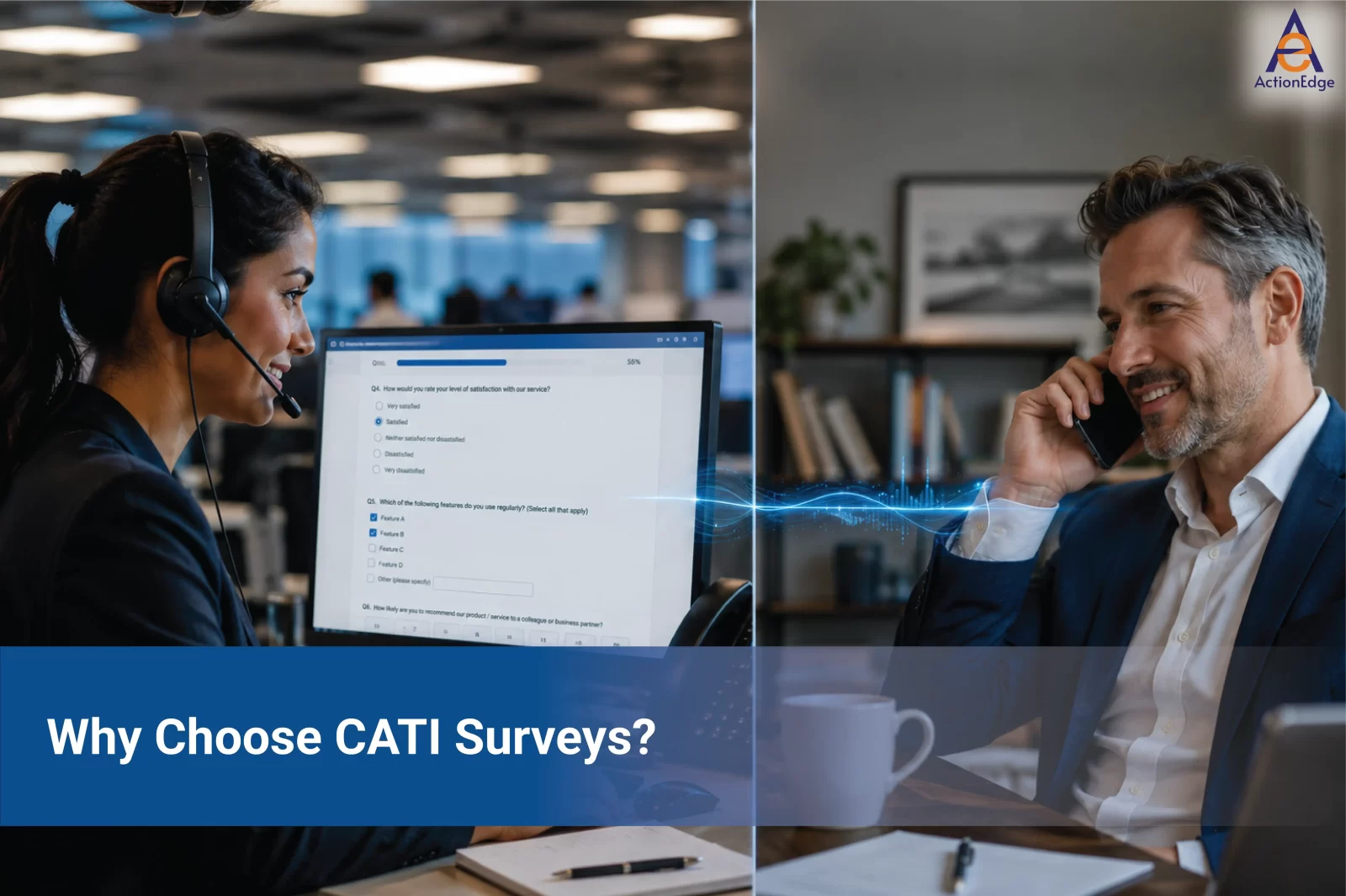
Computer Assisted Telephone Interviewing (CATI) is a research method where trained interviewers conduct surveys over the phone using specialized software. Responses are entered directly into the system, ensuring accuracy, consistency, and efficient data capture.
In an age dominated by digital channels, some may wonder whether telephone research still has a place. The answer is yes.
Consumers are experiencing survey fatigue. Email questionnaires are often ignored, while online surveys may suffer from poor engagement and incomplete responses. CATI provides a human touch that encourages participation and allows interviewers to clarify questions in real time.
This is why CATI market research continues to play an important role across industries in 2026. Businesses seeking dependable, actionable insights are increasingly using telephone interviews alongside digital approaches to improve data quality and response rates.
Higher Response Rates
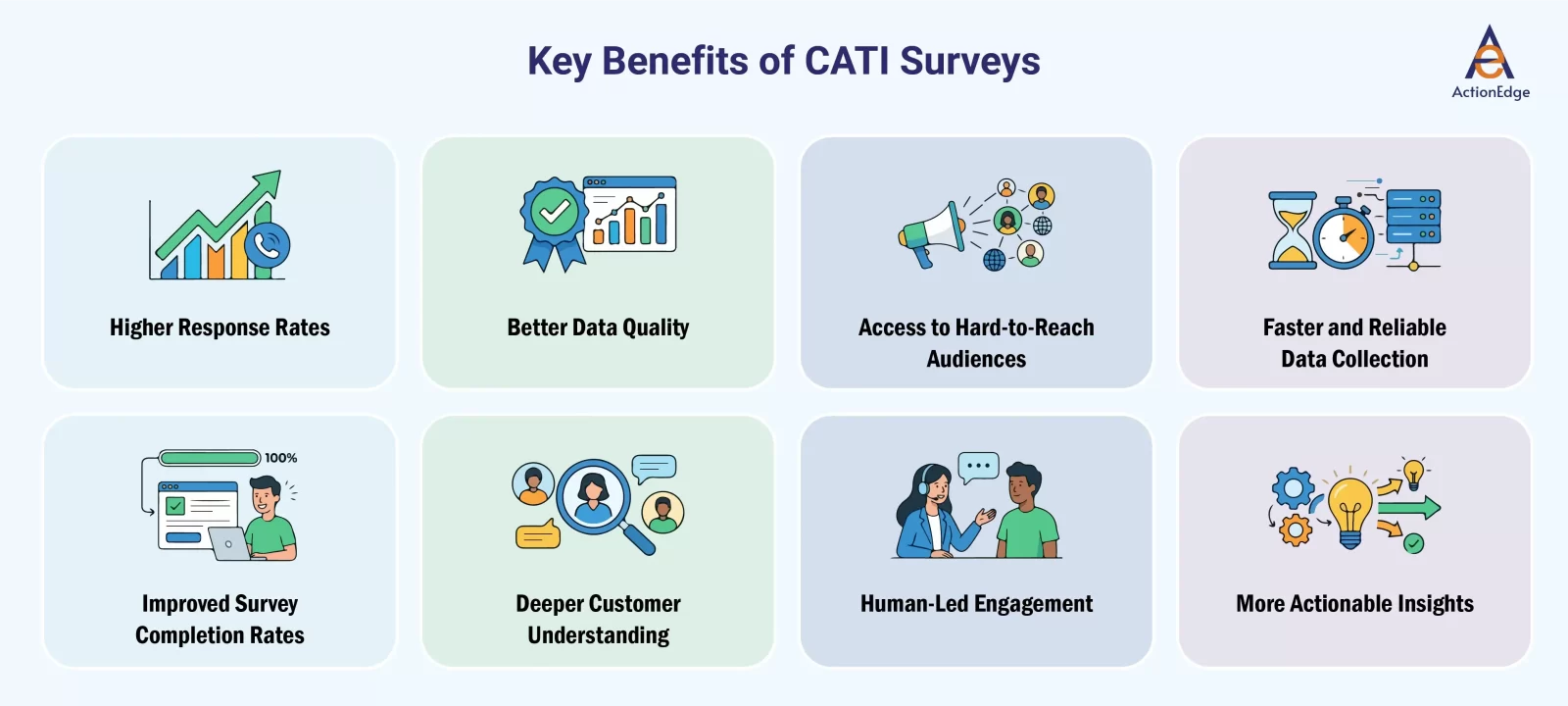
One of the biggest advantages of telephone interviewing is participation. People are often more willing to answer questions when guided by a professional interviewer.
Businesses frequently ask, How CATI improves survey response rates compared to digital methods. The answer lies in engagement. Interviewers can build rapport, explain the purpose of the study, and encourage respondents to complete the survey.
Better Data Quality
Unlike self-administered surveys, CATI reduces misunderstandings. If respondents are confused, interviewers can provide clarification immediately.
This leads to:
- More accurate responses
- Reduced inconsistencies
- Lower abandonment rates
- Improved reliability of findings
For companies making critical decisions, high-quality data is far more valuable than simply collecting large volumes of responses.
Access to Hard-to-Reach Audiences
Certain audiences are difficult to reach through online panels. Senior decision-makers, healthcare professionals, utility customers, and specialized B2B segments often respond better to phone interviews.
This makes CATI especially valuable for CATI for B2B market research, where reaching niche audiences requires persistence and human interaction.
Faster and More Reliable Data Collection
Modern CATI platforms enable efficient survey data collection with built-in quality checks, skip logic, and real-time monitoring.
Compared to traditional phone surveys, today’s systems provide:
- Faster fieldwork execution
- Real-time reporting
- Reduced manual errors
- Improved consistency
These advantages make telephone survey research a dependable option for time-sensitive studies.
When Should Businesses Use CATI Surveys?
While CATI is versatile, certain situations particularly benefit from this approach.
Customer Satisfaction Studies
Organizations often use CATI to understand customer experiences, loyalty, and service quality.
For example, a telecom provider seeking feedback after a service upgrade may achieve higher completion rates through phone interviews compared with email surveys.
B2B Research
Reaching executives and decision-makers can be challenging. Many busy professionals ignore online questionnaires.
This is where CATI market research proves valuable. Skilled interviewers can engage respondents, schedule callbacks, and obtain more thoughtful answers.
Healthcare, Telecom, and Utilities Research
Industries dealing with regulated environments or complex topics often require more detailed conversations.
Healthcare studies involving physicians or patients benefit from interviewer support, while utilities and telecom companies frequently use CATI to evaluate service experiences and customer needs.
Complex Survey Projects
Some questionnaires involve multiple sections, technical terminology, or detailed explanations.
CATI helps respondents navigate these complexities while ensuring consistency and completeness.
Common Challenges CATI Helps Solve
Challenge 1: Low Online Survey Response Rates
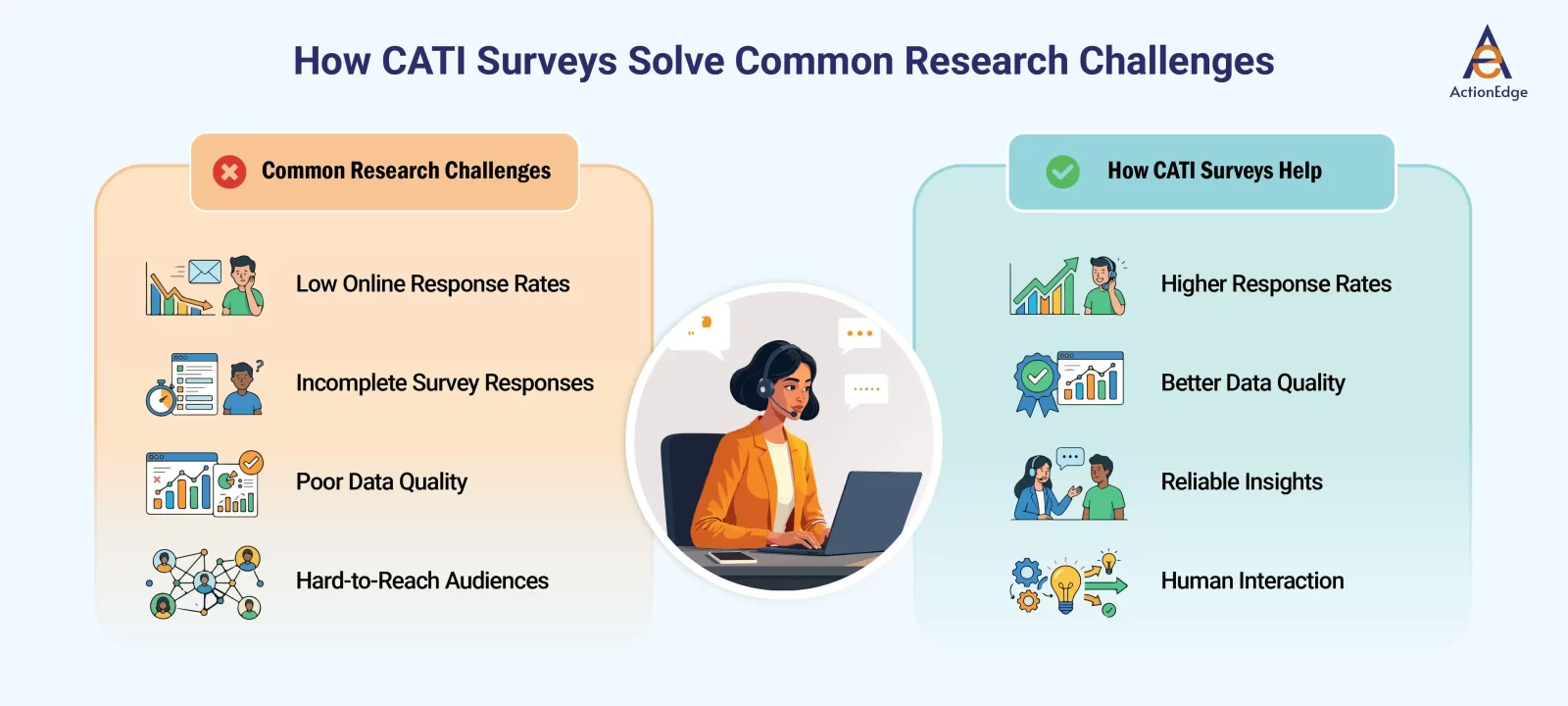
Online surveys are convenient, but participation rates can be disappointing.
Many businesses comparing CATI vs Online Surveys find that telephone interviews provide stronger engagement, particularly for important or lengthy studies.
Challenge 2: Incomplete Survey Responses
Respondents often abandon online questionnaires midway.
With CATI, interviewers guide participants through the process, leading to significantly higher completion rates.
Challenge 3: Need for High-Quality Data
Business decisions depend on trustworthy insights.
Interviewers can clarify questions and probe where necessary, improving the accuracy and richness of responses.
Challenge 4: Researching Niche Audiences
Imagine trying to survey procurement heads or specialist physicians through an online panel. Finding and engaging these respondents can be difficult.
Telephone interviews offer flexibility and persistence, making them ideal for specialized audiences.
Challenge 5: Understanding Customer Intent Behind Responses
Numbers alone rarely tell the complete story.
Suppose a customer rates satisfaction as six out of ten. A trained interviewer can ask follow-up questions and uncover the reasons behind the rating.
This additional context transforms raw data into meaningful insights.
Why Combining CATI with Other Research Methods Delivers Better Insights
Research is evolving. Instead of relying on a single approach, organizations are embracing Hybrid market research to capture a more complete picture.
CATI + CAWI
CAWI (Computer-Assisted Web Interviewing) and CATI complement each other perfectly.
Online surveys provide scale and speed, while telephone interviews improve engagement and reach audiences that may not respond digitally.
This blended approach helps researchers maximize coverage and response quality.
CATI + IDIs
Combining quantitative surveys with qualitative in-depth interviews creates richer insights.
For example, an automotive company may conduct a large-scale CATI study to identify trends and then follow up with IDIs to understand motivations and unmet needs.
Benefits of Hybrid Research
A hybrid approach offers:
- Broader audience reach
- Improved response rates
- Enhanced data quality
- Deeper customer understanding
- Stronger decision-making
Businesses conducting Quantitative market research increasingly combine methodologies to balance scale with depth.
How ActionEdge Helps Businesses Conduct Effective CATI Research
ActionEdge is a global insights partner providing customized CATI research services that help organizations collect reliable and actionable data.
With extensive experience across industries and markets, ActionEdge supports businesses with:
Global Reach
Access to diverse audiences across regions and countries through multilingual capabilities and experienced interviewing teams.
Experienced Interviewers
Professionally trained interviewers ensure consistency, respondent engagement, and high-quality data collection.
Advanced Technology
Modern CATI systems provide:
- Real-time monitoring
- Quality control mechanisms
- Efficient reporting
- Secure data management
Customized Research Solutions
No two projects are alike. ActionEdge designs studies based on business objectives, audience requirements, and research complexity.
As a trusted market research company, ActionEdge delivers flexible market research services that support both standalone CATI studies and hybrid research programs.
Whether your goal is customer experience measurement, healthcare research, B2B studies, or international projects, ActionEdge helps transform responses into actionable insights.
Conclusion
In a world where digital noise makes it harder to connect with respondents, CATI Surveys continue to prove their value. They offer higher response rates, stronger data quality, access to niche audiences, and the ability to uncover the “why” behind customer opinions.
If your organization struggles with low participation, incomplete responses, or the need for more reliable insights, CATI could be the missing piece in your research strategy.
The right approach depends on your objectives, target audience, and the type of information you need. In many cases, combining CATI with other methods creates even more powerful results.
If you’re evaluating whether CATI is the right fit for your next project, ActionEdge can help. Our experienced team designs tailored research solutions that deliver dependable insights and support smarter business decisions. Reach out to ActionEdge to discover how the right research approach can turn conversations into a competitive advantage.
Frequently Asked Questions
As a Global market research company, ActionEdge can provide market research services across markets in a scalable manner, and CATI research services are available in multiple languages. ActionEdge has the knowledge and expertise to ensure that high-quality data is collected using CATI market research services globally.
A combination of CATI surveys and digital research methods allows for a more comprehensive hybrid market research approach. This will yield richer insights while maximizing the researcher’s ability to reach respondents.
Yes, CATI research services can be utilized in engaging hard-to-reach, niche, or professional respondents effectively. The use of Interviewers improves Interviewee participation and data quality.
Businesses utilize CATI Surveys when they require engagement at a deeper level or validation of responses, or access to hard-to-reach/limited audiences. The use of CATI surveys for B2B market research or complex studies has proven to be the most effective quantitative methodology available.
CATI market research is still useful in achieving an improved quality of responses and the opportunity to survey respondents who do not typically fill out online surveys, even as digital methods are becoming increasingly more prevalent. CATI continues to be an effective format for Quantitative market research.
Computer assisted telephone interviewing or CATI Surveys utilize a computer program as a guide for interviewers to gather structured responses to interviewees’ answers in a consistent and accurate manner to collect telephone survey research and survey data collection.