A consumer can believe in a greener future and still say no to clean energy. The question is, why?
A homeowner may want solar panels but worry about the upfront cost. A family may be interested in energy-efficient technology but hesitate because of maintenance concerns. Another consumer may support renewable energy yet struggle to trust the savings a provider promises.
For businesses operating in the clean energy sector, these moments of hesitation can reveal more than a lack of purchase intent. They can expose unmet needs, unanswered questions, and practical obstacles that prevent consumers from taking the next step.
Understanding these concerns requires looking beyond what consumers choose and exploring why they choose it. In-depth interviews (IDIs) allow participants to discuss their experiences, motivations, and expectations in detail. In-depth interviews for clean energy research can reveal what holds consumers back and what might encourage them to reconsider.
This blog explores 10 ways IDIs uncover the factors influencing consumer decisions and help explain the gap between interest in clean energy and actual adoption.
10 Ways In-Depth Interviews Uncover Clean Energy Adoption Barriers
Consumers may hesitate for different reasons, even when considering the same clean energy solution. Here are 10 ways IDIs explore these concerns and identify what could encourage adoption.
1. Uncovering Concerns About Upfront Costs
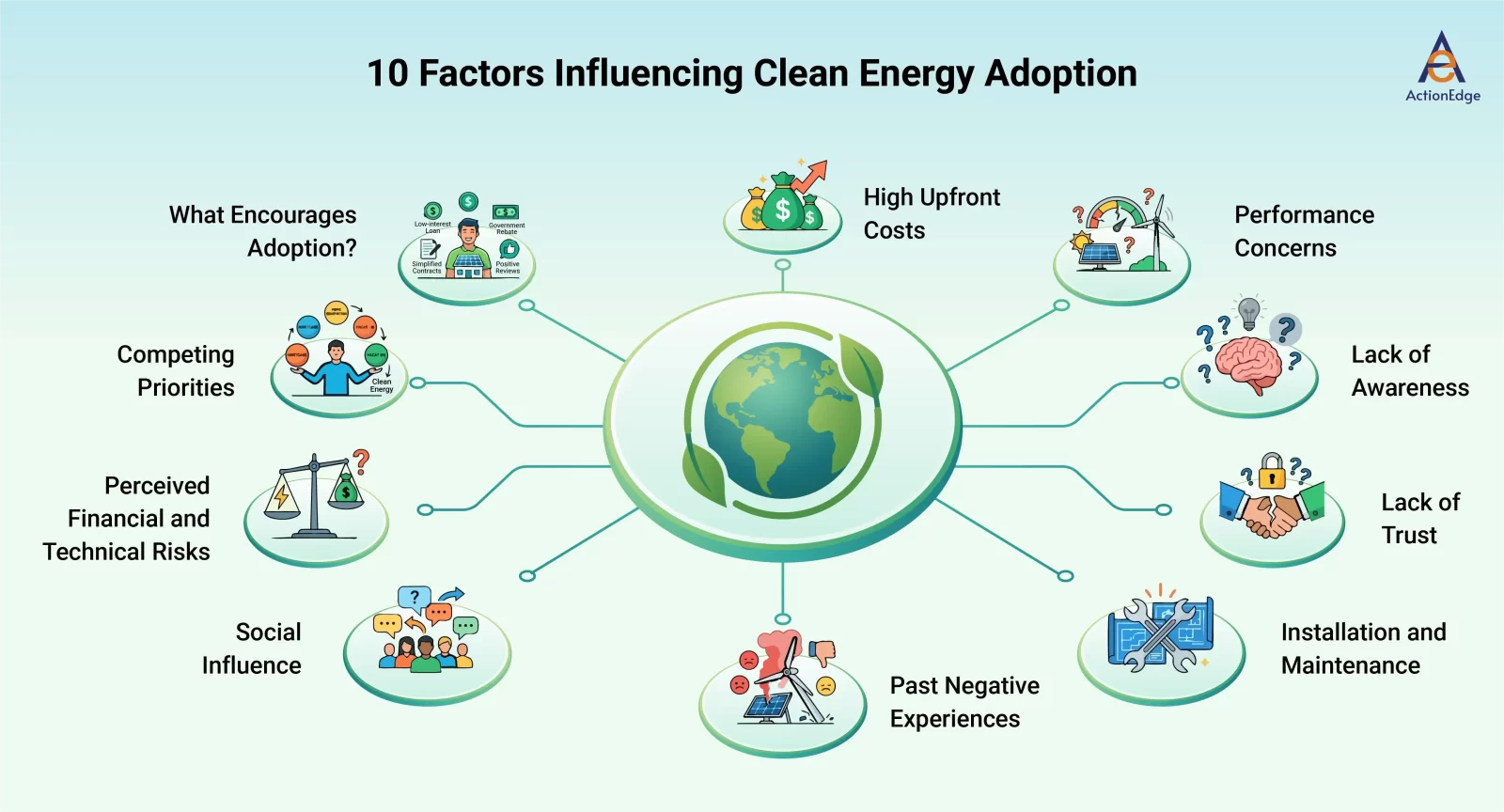
The initial investment can be a significant obstacle to clean energy adoption. Solar panels, home battery systems, and energy-efficient upgrades may offer long-term benefits, but consumers must first feel comfortable with the immediate expense.
Yet affordability is not always the only concern. Some consumers may have the financial resources but remain uncertain about payback periods, future savings, or unexpected expenses.
Consider a homeowner interested in solar panels who hesitates because the monthly savings are unclear. Exploring this concern through an IDI can reveal whether financing options, transparent cost breakdowns, or clearer return estimates would influence the decision.
2. Understanding Doubts About Performance and Reliability
Will solar panels generate enough electricity during cloudy weather? How long will a home battery last? Can renewable energy solutions reliably meet everyday household needs?
Questions like these can influence purchasing decisions, particularly when consumers have limited experience with the technology.
Through IDIs, participants can explain what they believe about system performance and where those perceptions originate. A consumer who assumes solar panels cannot generate sufficient electricity throughout the year, for instance, may be relying on outdated information.
Such conversations can identify opportunities for clearer product explanations, practical demonstrations, and more realistic performance communication.
3. Revealing Gaps in Awareness and Understanding
Interest in clean energy does not necessarily mean consumers understand the available options.
Financial incentives, installation requirements, maintenance responsibilities, and differences between technologies can create confusion during the decision-making process.
A household might want solar panels but have no idea whether its roof is suitable. Another may struggle to compare installation quotes because providers present costs and specifications differently.
Rather than assuming consumers need more information, IDIs can reveal exactly which details are missing or difficult to understand. These findings can guide improvements in customer education and purchasing journeys.
4. Exploring Trust in Providers and Technology
Trust plays an important role when consumers consider unfamiliar technologies or substantial investments. Doubts about product quality, installer credentials, warranties, and sustainability claims can discourage potential buyers.
How do consumers evaluate the credibility of renewable energy providers? Do they rely on online reviews, recommendations, certifications, or personal interactions with sales representatives?
An interview may reveal that a consumer supports solar energy but distrusts the savings estimates offered by a salesperson.
The challenge, in this case, is not necessarily the technology itself. Transparent pricing, clear warranties, credible customer testimonials, and realistic performance expectations may help address the underlying concern.
5. Identifying Installation and Maintenance Concerns
Even when consumers recognize the benefits, practical considerations can delay adoption. Installation disruption, property suitability, repair costs, and ongoing maintenance may make the transition seem complicated.
Qualitative research in renewable energy can explore how these concerns differ across consumer groups and living situations.
For an apartment resident, the main obstacle might be limited control over property modifications. A homeowner, meanwhile, may worry about maintenance responsibilities or potential repair expenses.
Understanding these differences allows businesses to address specific concerns instead of approaching every hesitant consumer with the same message.
6. Understanding the Influence of Previous Experiences
A disappointing experience with one technology can influence how consumers approach another.
Someone who has experienced poor after-sales service with a home appliance may hesitate before investing in a home energy system. Conversely, positive experiences with energy-efficient upgrades may encourage interest in additional solutions.
IDIs provide space for consumers to describe these experiences in their own words and explain how they affect current expectations.
The discussion may also reveal the influence of installers, existing customers, and trusted professionals. These personal experiences can shape confidence long before consumers begin comparing products.
7. Examining the Role of Social Influence
Consumers rarely make decisions in isolation. Family members, friends, neighbours, and local communities can influence how they perceive clean energy technologies.
Imagine a homeowner who becomes interested in solar panels after seeing a neighbour’s installation. A conversation about lower electricity bills may strengthen that interest, while hearing about unexpected maintenance costs could create hesitation.
Who do consumers trust when evaluating clean energy solutions? Whose experiences carry the most weight?
Exploring these relationships through IDIs can help identify the role of word-of-mouth, customer testimonials, and community perceptions in shaping purchase decisions.
8. Exploring Perceived Risks and Uncertainty
Clean energy investments can involve long-term commitments. Consumers may worry about technology becoming outdated, systems underperforming, future repair costs, or savings failing to meet expectations.
These are important renewable energy adoption challenges, particularly when consumers lack the information needed to evaluate competing options.
However, the perceived risk is not always the same.
One consumer may be concerned about losing money, while another fears investing in a system that will no longer meet household needs in a few years.
By exploring these concerns individually, IDIs can distinguish financial uncertainty from technical doubts and long-term ownership concerns. This distinction can inform how businesses communicate warranties, product lifespans, and expected costs.
9. Understanding the Gap Between Sustainability Values and Actual Decisions
Supporting environmental sustainability does not automatically translate into purchasing clean energy solutions.
Consumers may value reducing emissions while prioritizing affordability, convenience, household needs, or other financial commitments.
Exploring consumer perceptions of clean energy can reveal why positive attitudes do not always lead to action.
A family may support renewable energy but prioritize replacing an essential household appliance over installing solar panels. Another consumer may be interested in switching but face restrictions as a tenant.
These situations highlight the importance of understanding real-world circumstances rather than assuming environmental awareness alone will drive adoption.
10. Discovering What Could Encourage Adoption
Understanding hesitation is only half the picture. The next question is what would make consumers more willing to act.
Would flexible financing make a difference? Would installation support reduce uncertainty? Could clearer savings estimates or performance guarantees build confidence?
IDIs allow participants to respond to these possibilities and explain which changes would genuinely influence their decisions.
For instance, someone who previously rejected solar panels may reconsider if the installation process becomes simpler and the expected savings are explained transparently.
These discussions can help identify practical decision triggers and opportunities to make clean energy solutions more relevant to consumer needs.
Why In-Depth Interviews Matter in Clean Energy Research
Surveys can measure awareness, purchase intent, and the prevalence of specific concerns across a defined sample. However, they may not fully explain why consumers hold those views or how competing considerations influence their decisions.
Qualitative research addresses this gap through open-ended conversations, follow-up questions, and exploration of individual circumstances.
Consider the statement, “Solar energy is too expensive.”
Does the consumer mean the upfront payment is unaffordable? Are the expected savings unclear? Is there concern about unexpected maintenance costs? Or does the consumer distrust the installation quote?
Each explanation points to a different issue that a structured survey response may not fully capture.
For research agencies and consultancies conducting clean energy studies, these conversations provide the depth needed to understand consumer motivations, evaluate perceptions, and identify potential barriers to adoption.
Working with experienced qualitative research companies such as ActionEdge can help agencies access relevant participants and conduct interviews aligned with their study objectives.
As a market research company specializing in respondent recruitment and fieldwork, ActionEdge supports qualitative studies through participant screening, interview coordination, and data collection across consumer and B2B audiences.
How ActionEdge Supports Clean Energy Qualitative Research
For research agencies and consultancies planning consumer studies in the clean energy sector, recruiting the right participants and conducting well-managed interviews are essential to obtaining relevant insights.
ActionEdge supports qualitative research projects through its established recruitment and fieldwork capabilities.
Our capabilities include:
- Targeted Consumer Recruitment: Identifying and screening participants based on study-specific criteria, including demographics, household characteristics, technology ownership, purchase intentions, and relevant consumer experiences.
- In-Depth Interview Fieldwork: Supporting virtual and telephone IDIs, interview scheduling, participant coordination, and fieldwork management based on project requirements.
- Multi-Market Research Support: Facilitating recruitment and qualitative fieldwork across North America, Europe, APAC, LATAM, and other markets through our international research capabilities.
- Multilingual Research Support: Supporting projects across 20+ languages, including interview coordination and translation and transcription services where required.
- Flexible Project Support: Offering recruitment-only or end-to-end qualitative fieldwork support, depending on the agency’s research objectives and requirements.
Through these capabilities, ActionEdge helps research agencies and consultancies manage consumer recruitment and qualitative fieldwork across markets, whether they require recruitment-only support or end-to-end project execution.
Conclusion
The path to clean energy adoption is shaped by more than environmental awareness. Financial constraints, doubts about performance, trust, practical limitations, and competing priorities can all influence whether consumers move forward or postpone a decision.
Understanding these clean energy adoption barriers begins with listening to consumers, exploring their experiences, and looking beyond their initial answers.
For agencies and consultancies conducting clean energy studies, IDIs provide an opportunity to uncover the motivations behind hesitation and identify what could encourage consumers to act.
Planning a clean energy research study? Email us at rfp@action-edge.com to explore how we can support your project.