

A shopper can discover a product on Instagram, compare prices on a marketplace, read reviews on their phone, visit a store to see it in person, and still abandon the purchase at checkout. The modern shopper rarely follows a straight path.
Price, convenience, reviews, personalization, brand experience, and changing expectations can all influence what happens next. This makes shopper behavior increasingly difficult to understand through sales figures or customer feedback alone.
This is where qualitative and quantitative research work together. Quantitative research tells retailers what shoppers are doing, while qualitative research helps explain why.
The Modern Shopper Is Harder to Predict
Today’s retail consumer has more choices, more information, and more ways to buy than ever before. A shopper may move between websites, mobile apps, social media, marketplaces, and physical stores within a single purchase journey.
They are also more price-conscious, expect relevant recommendations, rely heavily on reviews and social proof, and increasingly value convenience. At the same time, shoppers can switch brands quickly when another option offers better value, experience, or availability.
Sustainability is also becoming part of the consideration set for many consumers, particularly when brand values align with their own expectations.
For retailers, these behaviors raise important questions:
What drives the purchase? What creates hesitation? Why does one shopper remain loyal while another switches?
This is where retail market research becomes valuable. Instead of looking only at what customers purchased, retailers can investigate the motivations, perceptions, preferences, and experiences behind those decisions.
Who Is the Modern Shopper?
The modern shopper is not defined simply by age or income. Their behavior is shaped by the context in which they shop.
Common characteristics include:
- Greater sensitivity to price and perceived value
- Higher expectations for personalization
- Heavy reliance on reviews and recommendations
- Demand for convenient and faster experiences
- Frequent movement between online and offline channels
- Lower barriers to switching between brands
- Growing interest in experience, value, and sustainability
These behaviors are not always visible in transactional data. Retailers need multiple research approaches to understand what is happening beneath the surface.
What Qualitative Research Reveals About Shoppers
Qualitative research helps retailers explore the human side of shopping behavior. It uncovers emotions, motivations, perceptions, frustrations, and unmet needs that may not appear in a structured survey.
Methods such as in-Depth Interviews (IDIs), focus groups, and online bulletin boards allow researchers to hear shoppers describe their experiences in their own words.
For example, sales data might show that customers are abandoning a particular product category. Qualitative conversations could reveal that shoppers find the packaging confusing, do not understand the product benefits, or feel the price is difficult to justify.
This is also where qualitative research in retail can help uncover:
- Why shoppers prefer one brand over another
- Friction during online or in-store journeys
- Emotional drivers behind purchases
- Unmet product and service needs
- Reactions to packaging, pricing, and messaging
In simple terms, how qualitative research helps retailers is by providing the why behind shopper behavior.
What Quantitative Research Tells Retailers
Quantitative research gives retailers measurable, scalable evidence. It can help determine whether a behavior observed among a small group is widespread across a larger customer population.
Retailers can use online surveys, phone surveys, multi-mode studies, customer satisfaction surveys, brand tracking, and product or concept testing.
For example, CAWI research for retail can help measure preferences across a broad online audience, while CATI research for retail can reach specific customer groups through structured telephone interviews. Phone-to-Web via Screen Access can also combine interviewer interaction with digital survey experiences when the research requires respondents to engage with online stimuli.
Through quantitative research in retail, businesses can measure:
- Purchase intent
- Brand awareness
- Customer satisfaction
- Price sensitivity
- Product preferences
- Channel preferences
- Customer loyalty
- Demographic and behavioral differences
The key questions here are how many, how often, how much, and which segments.
Why Retailers Need Both Qualitative and Quantitative Research
Using only one approach can leave a significant gap.
Imagine a retailer’s survey shows that 42% of customers consider delivery speed a major factor when choosing a retailer. That gives the business a measurable finding, but it does not fully explain what “speed” means to those shoppers.
Are they frustrated by long delivery windows? Do competitors offer faster delivery? Are shoppers willing to pay more for same-day delivery?
Qualitative conversations can answer those questions.
The complementary flow looks like this:
Quantitative → Identify the pattern
↓
Qualitative → Understand the reason
↓
Combined insight → Make a better retail decision
This combination allows retailers to move from numbers to context, rather than treating either type of evidence in isolation.
Key Retail Areas Where Qual + Quant Research Can Help
Customer Experience
Identify pain points across websites, apps, stores, checkout, delivery, and returns.
Product Development
Discover unmet needs, explore ideas, and validate new product concepts before launch.
Pricing Research
Understand price sensitivity, perceived value, and willingness to pay.
Brand Research
Measure awareness and consideration while exploring how shoppers perceive the brand.
Omnichannel Shopping
Understand how consumers move between websites, apps, marketplaces, social platforms, and physical stores.
Promotions and Messaging
Identify which offers, claims, and messages resonate with different shopper groups.
Shopper Segmentation
Combine behavioral patterns with deeper motivations to create more meaningful shopper segments.
Building a More Complete Shopper Journey
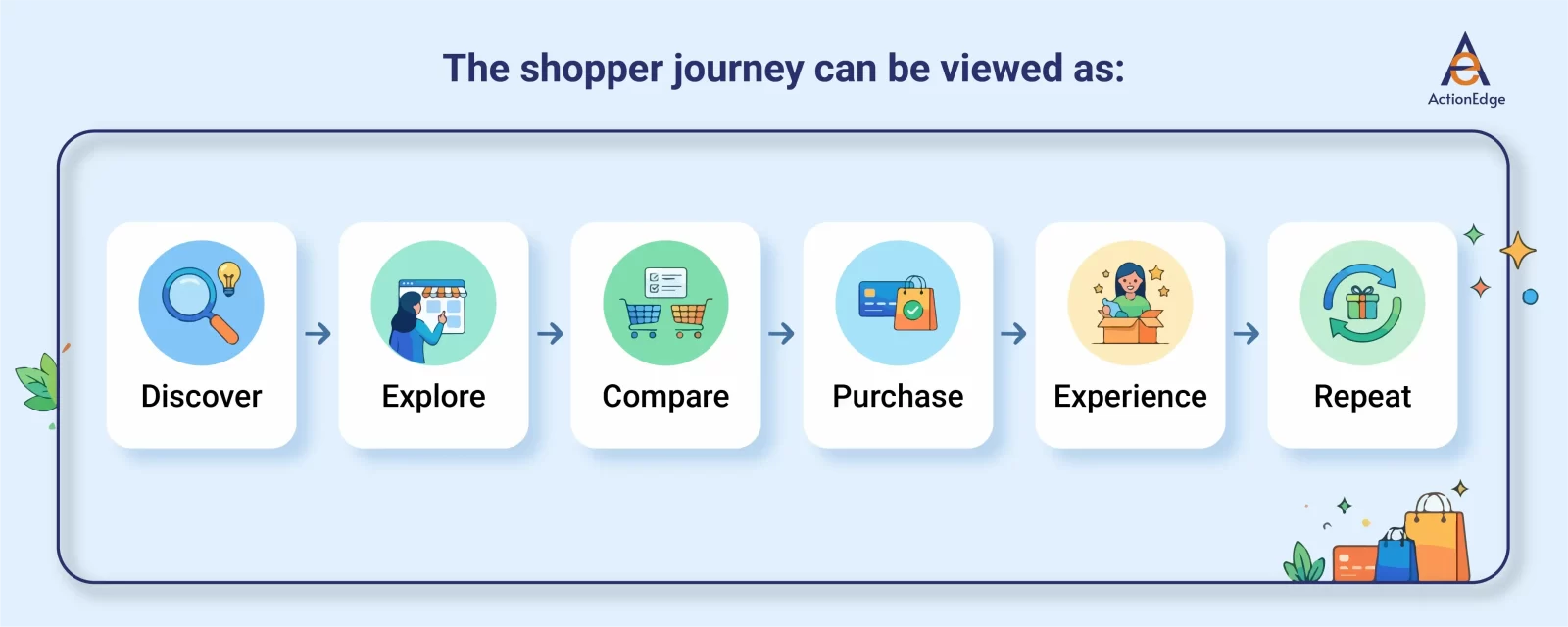
At every stage, different research questions emerge.
Qualitative research can uncover why a shopper becomes interested, what creates hesitation, or what makes an experience memorable. Quantitative research can then measure how common those behaviors are and which issues matter most across customer groups.
For example, interviews may reveal that shoppers abandon a mobile purchase because product information feels incomplete. A subsequent survey can establish how widespread that issue is and whether it affects purchase intent.
That combination creates a more complete view of the journey and helps retailers prioritize improvements based on both depth and scale.
Conclusion
Modern shoppers are complex, and no single research method can capture the complete picture. Qualitative research explains the motivations behind behavior, while quantitative research measures the scale and significance of those behaviors.
For retailers, bringing both approaches together can support better decisions across products, pricing, customer experience, branding, and omnichannel strategy. A strong market research service can help connect these different sources of shopper insight and turn them into evidence that teams can act on.
At ActionEdge, our role as a market research company is to help businesses access the right respondents and research approaches to understand both what shoppers do and what drives those decisions.